Forest Floor Photography

Reading Time: 4 minutes

There is nothing overwhelmingly spectacular about the forest preserves around Chicago: no huge peaks, no giant waterfalls, no magnificent canyons. The forest is up close and you’re in it; you can’t capture the forest for the trees. The intrigue of photography in the forest is finding the subtle; you have to keep your eyes open. Or maybe you just have to have the right eyes to appreciate it: not everyone gets as excited about captures of mushrooms as I do; I just happen to think they are incredibly photogenic and interesting with subtle coloring, texture, and endless arrangements. Finding and capturing the nuances of nature in all its diversity is what makes the forest floor such an interesting and challenging place for me to photograph.

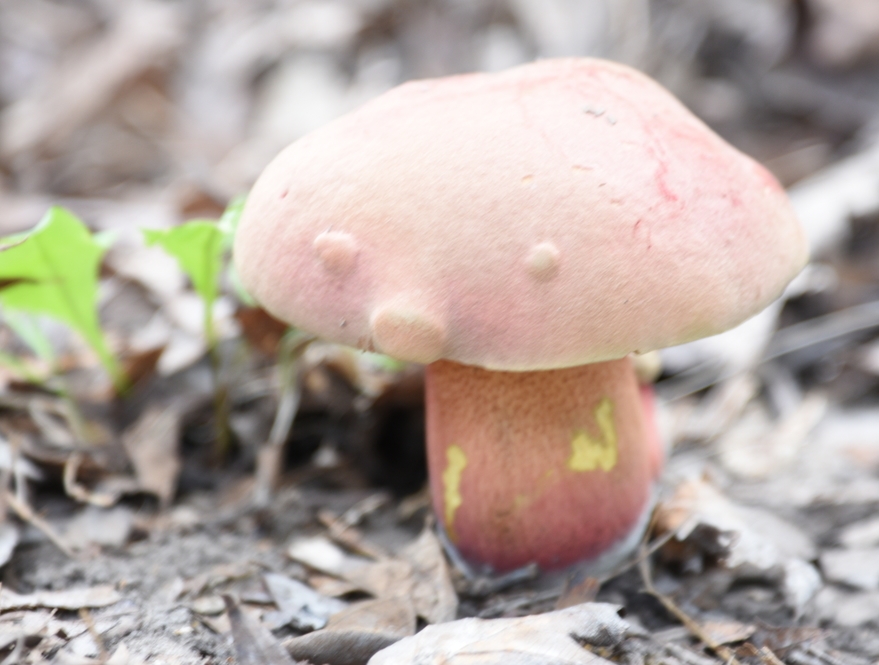
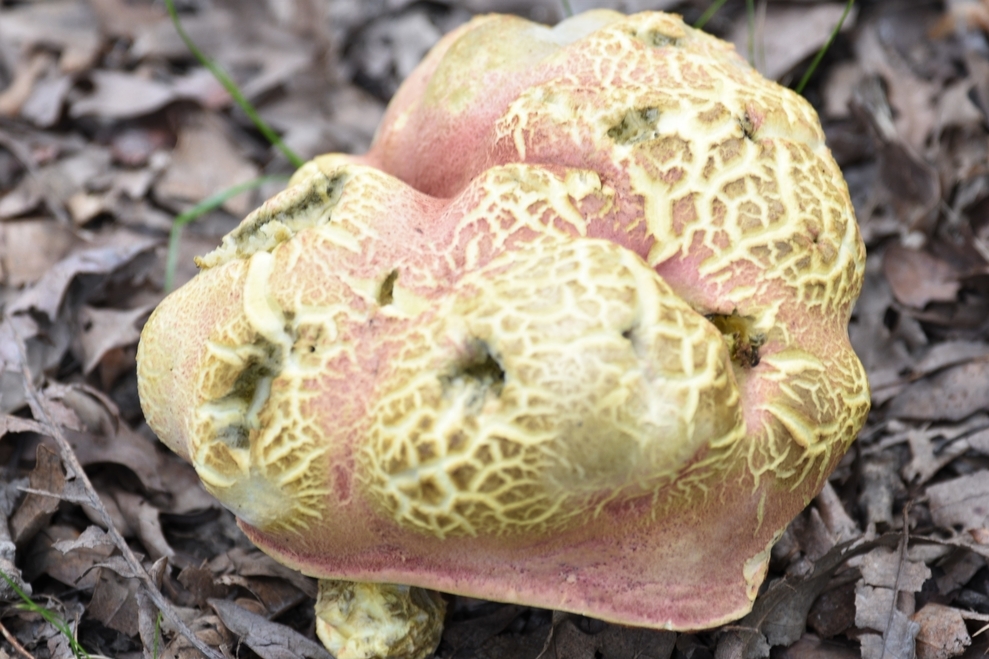
I have mixed emotions about the aesthetics of the mushroom I chose to show you: it’s more odd than artful. I’ve never seen anything quite like it, sitting on the forest floor under a massive oak tree. I didn’t want to destroy it, just to satisfy my curiosity, so I can’t for sure say whether it is bolette or brain. I suspect the former as I found a couple of more readily identifiable bolettes with red pores under the cap and a flesh that quickly stained from yellow to green to a deep blue. I posted the bolette for identification on iNaturalist.com but no identifications have been forthcoming.

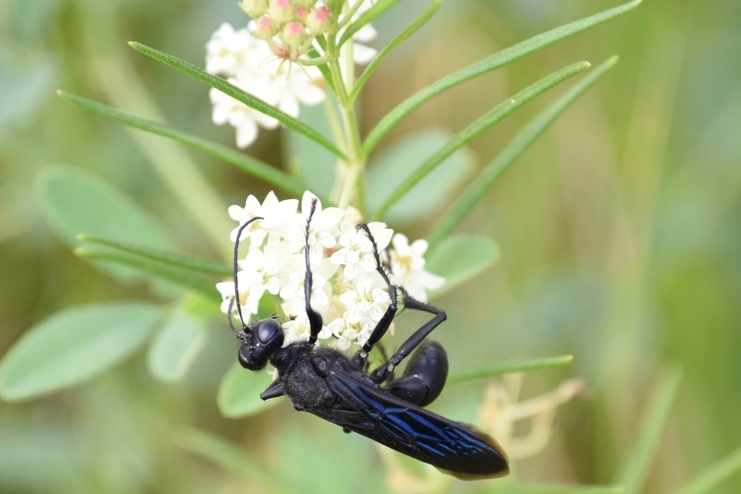
If your not a big fan of mushrooms, maybe you like insects? You need a camera that captures detail: the lacy wings of a dragonfly as it clasps to a stem; the pollen clumps attached to the leg of a bee; the glossy black eye of a wasp; the hairs on the legs of a mayfly; a bee working its way through a flower; or the orange and black beetles that contrast nicely with the teardrop shaped, light green, pods.


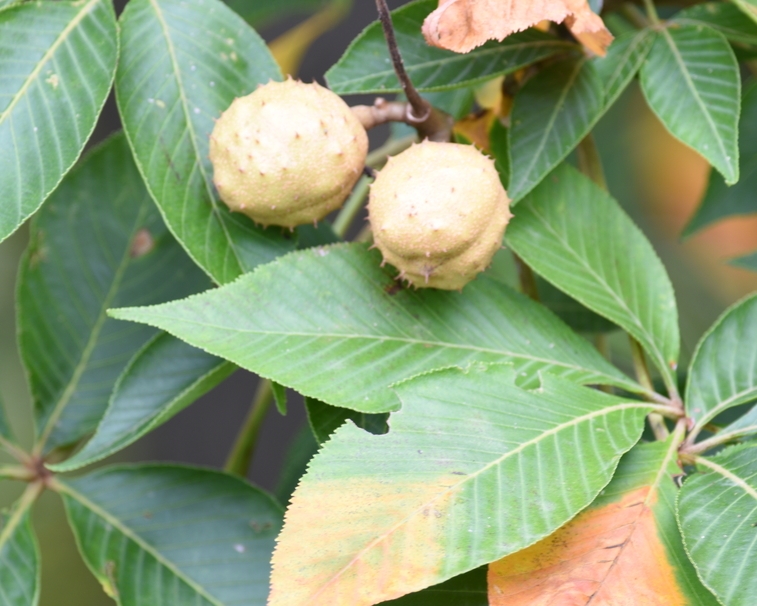
Every flower is an opportunity for an in the face picture of the full spectrum of colors and intriguing shapes. If you miss the flowers, the fruit might provide you with something equally surprising from the tiny little parasols of the dandelions to the tan prickly seed pods of the Ohio buckeye. After the in the face shot, you might try stepping back to see if you can make a composition with something interesting in the background by getting down to the level of your subjects.

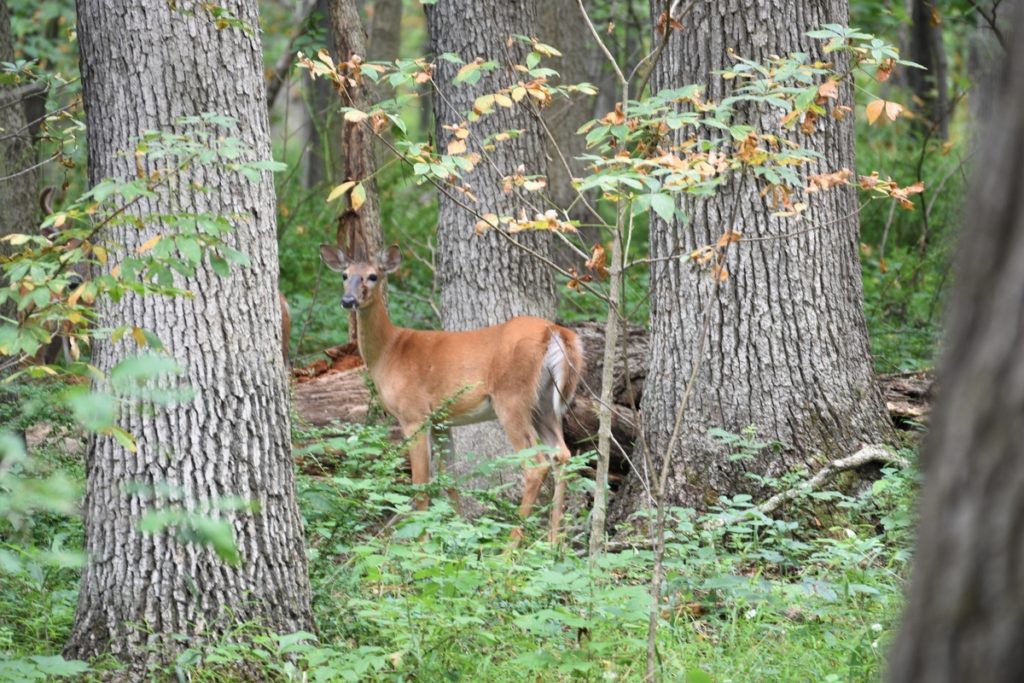
If you’re lucky, you might just happen upon some wildlife. The forest floor harbors snakes, birds, raccoons, and the occasional deer. Wildlife is skittish so it pays to have a lens that brings the picture to them rather than trying to bring yourself to the picture.

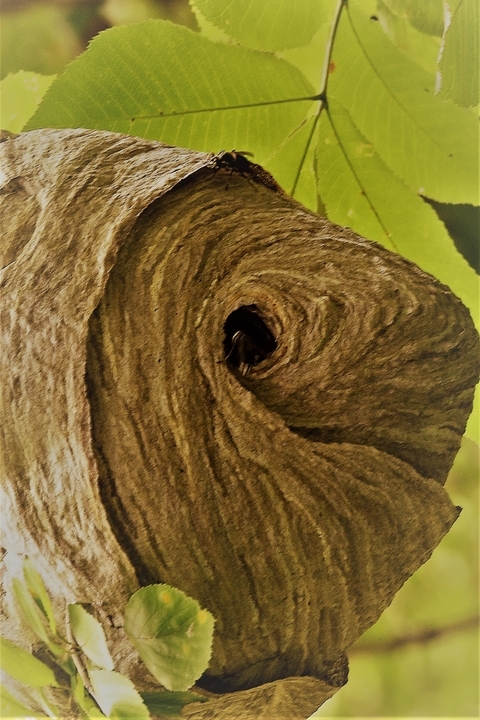
The woods is full of interesting textures and surprises. This last one I had some fun with. Any ideas what it is? I turned the picture on its side for the eye and the grin and added a grainy filter to give it more of a leathery texture. The creature is a bee hive turned on its side. The eye is the entrance and the eyelash is the leg of a bee entering its domicile. Nothing quite so prehistoric about it after all.

I love the idea of forest floor photography. I wish I had thought of the name but its already taken here https://www.facebook.com/ForestFloorPhotography/ by a friend of a friend. I looked at her pictures and instantly knew we have similar tastes and style. Of course I like capturing pictures of amazing places. But amazing shots wait at your feet on the forest floor.

Minarets

Reading Time: 9 minutes
Cell Phone Coverage.

On this trip, I travel with the Ansel Adams crowd rather than the John Muir crowd; nature photographers who want to capture an aesthetic on film rather than naturalists seeking a deep spiritual connection with the wilderness. Of course most everyone has some degree of both but there are telling differences on one’s predilection. The trail to Minaret lake shadows Minaret Creek heading due west never losing line of sight with Mammoth mountain and the Devil’s Postpile area. Cell phone coverage was five bars at the top of the mountain while only one bar at the base. If you think that is a good thing, you fall in the aesthetic category. If you think that is a bad thing, you fall in the spiritualist category.

I’m not here to judge, just to tell a story. Now, I turned my cell phone off, for most of the trip anyway. I usually keep it on because I like to snap fast pictures while hiking. I hate stopping, taking the backpack off, pulling out the camera, setting up, putting it all away. Hiking requires psychological momentum especially when you are hauling an extra fifty pounds of gear on your back. I started with the phone on for fast pictures. The cell phone surprised me with its little notification dings continuing as we progressed up the trail. So I turned it off. No dings, no digital map, no GPS, no alarm, no messenger, no chat, no phone.

On the way back, I decided to break the moratorium for some fast pictures. Instead I found a barrage of messages. My son reports that Guera is foaming at the mouth, Maruka is acting weird, and the house stinks. That was twelve hours ago. My own mouth foams at the stupidity of my dogs for getting skunked for the fourth time. I don’t even finish reading his messages when I get a panicked phone call from my neighbor. Maruka keeps escaping somehow, the dog is overheating from the 107 degree Santa Ana heat in Escondido, and the dog is stinking up her house. I tell her to use the gate on the porch to keep Maruka from getting out of the house into my yard to escape into hers and I’ll send my son over there as soon as possible. My son’s idea of as soon as possible isn’t quite the same as mine. After accepting my request to get over to my house, he calls me back to tell me he went back to sleep and doesn’t want to go over until six at night when he has a car. I’m worried about the air conditioner not kicking on, my neighbor being traumatized, the stink of the house, and the general condition of the dogs. I persuade my reluctant son to uber over to the house.

So now I am in two places at once. I’m trying to manage my problems at home while enjoying the hike back to the car. I’ve disconnected. My pace has increased substantially. As my friend puts it, “Who put a battery in your ass?” I’ve been supercharged by a cell phone. If I had left my cell phone on, I would have disconnected from the trip twelve hours earlier. I would have preferred to keep my cell phone off, or at least in airplane mode. I really can’t do anything until I hike the eight miles out and drive the eight hours home. I’m not quite spiritual but when I go to the wilderness, I want to focus on the wilderness set of challenges and problems; not on the everyday set of challenges and problems. I think that is the point of going to the wilderness in the first place. It means trust in my support at home. It means a zen focus on the moment. Am I being responsive by managing a situation that needs my input? Which is more connected? I don’t think there is a bottom line.

Mosquitoes

Which is a nice segue into the problems. I did not prepare properly for mosquitoes. I tried to buy some Off at the convenience store but they only had the big cans. I didn’t think it was worth the extra weight so I passed on the opportunity. So I had to borrow repellent from my friend. When I borrow, I’m reluctant to abuse the use to the point of not using enough. I don’t think it would have much of a difference. I have no delusions about who is the predator and who is the prey. With all the standing water and the warming temperatures, hoards of hungry mosquitoes stalk their prey where ever he may walk. I’m killing three and four mosquitoes with one slap. Wiping under one arm with the other hand to get at skin I can’t see, I come up with an unknown number of rolled up mosquito carcasses. One flies into my nose, another into my eye, one into my macaroni, one into the boiling hot water on the burner. Some spots are worse than others but they seem to find me no matter where I go.

Its not the worst mosquito swarm I’ve ever encountered. On a bike trip that took me through Havre, Montana, I stopped in front of store for a food break. A cloud of mosquitoes surrounded me almost instantly and I pedaled away as fast. I’ve since heard from a transplanted Havrian, that Havre is known as mosquito hell. If hell hath levels, I would rate Alaska number one. From the east-west gravel road that winds through Denali, I hiked down into the braided Teklanika river basin. I remember worrying about bears but bears have nothing on the masses of underfed mosquitoes that could obscure a body within one. If I had stayed for longer than five minutes, my pale lifeless corpse would have been sucked dry. I don’t know animals can live there.

Once my friend told me he wouldn’t do the planned hike to Iceberg Lake because of his knee, I proffered a new plan to leave the next day. You have to understand the daily rhythms of the photographer. They set up the first shots at five in the morning to catch the ten minutes of mountain reflection, complain about the overhead lighting from the sun for the next twelve hours, then take another round of pictures at sunset to again catch the few moments of mountain reflection. The thought of spending twelve hours in my bivy to protect myself from mosquitoes in the surprisingly hot sun was way more spirituality than I wanted to absorb on one trip. I took every opportunity to slap at the mosquitoes in the presence of my friends to make sure they feel my pain.

I didn’t find out about the skunk until we already decided to hike out. I think I would have been crawling out of my skin if I had to worry about my house, my dogs, and my neighbor while mosquitoes sipped desperately at my boiling blood through the thin netting of my bivy.

Ansel Adams

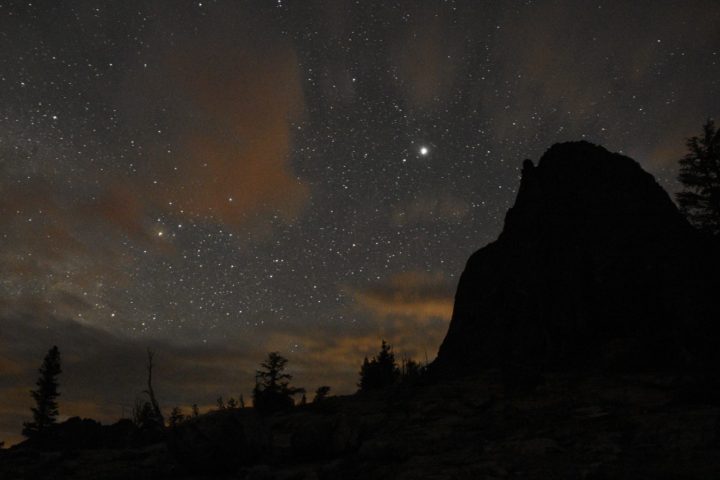
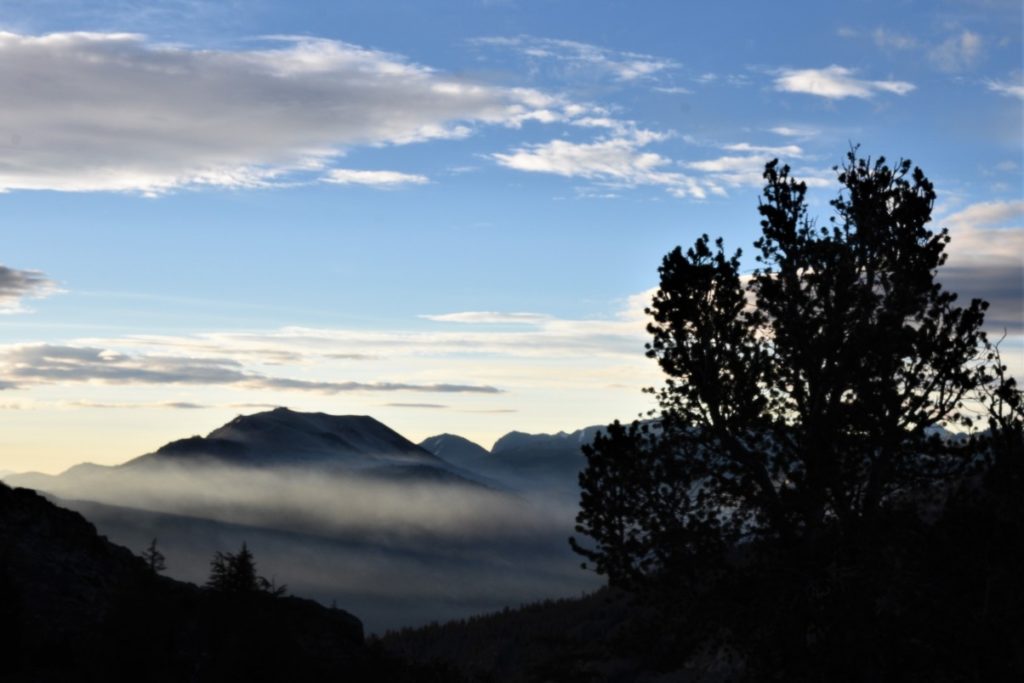
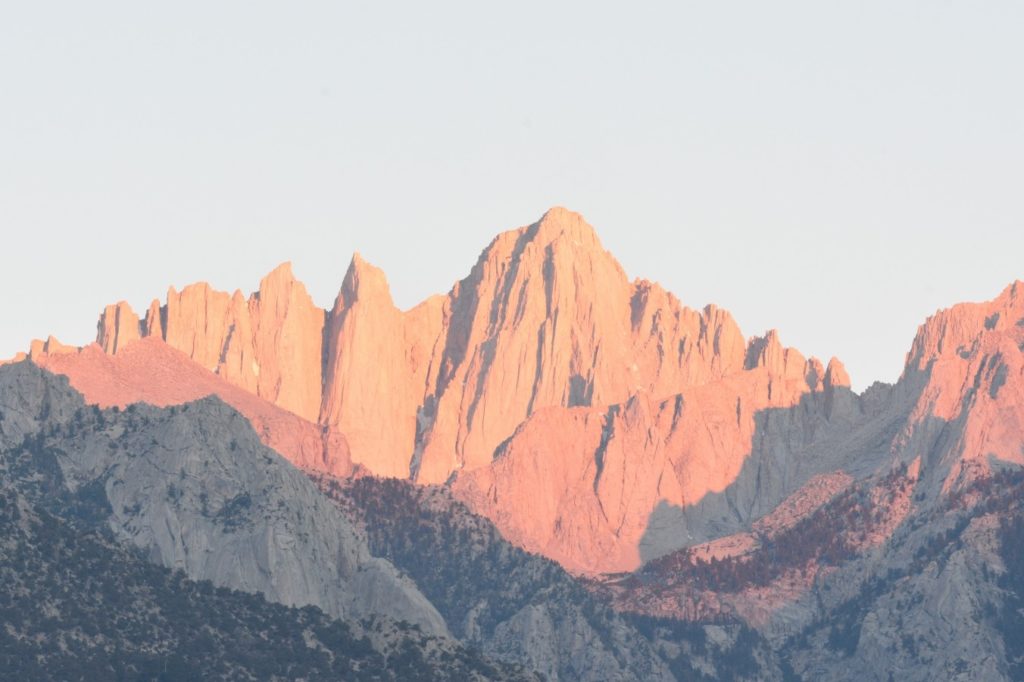
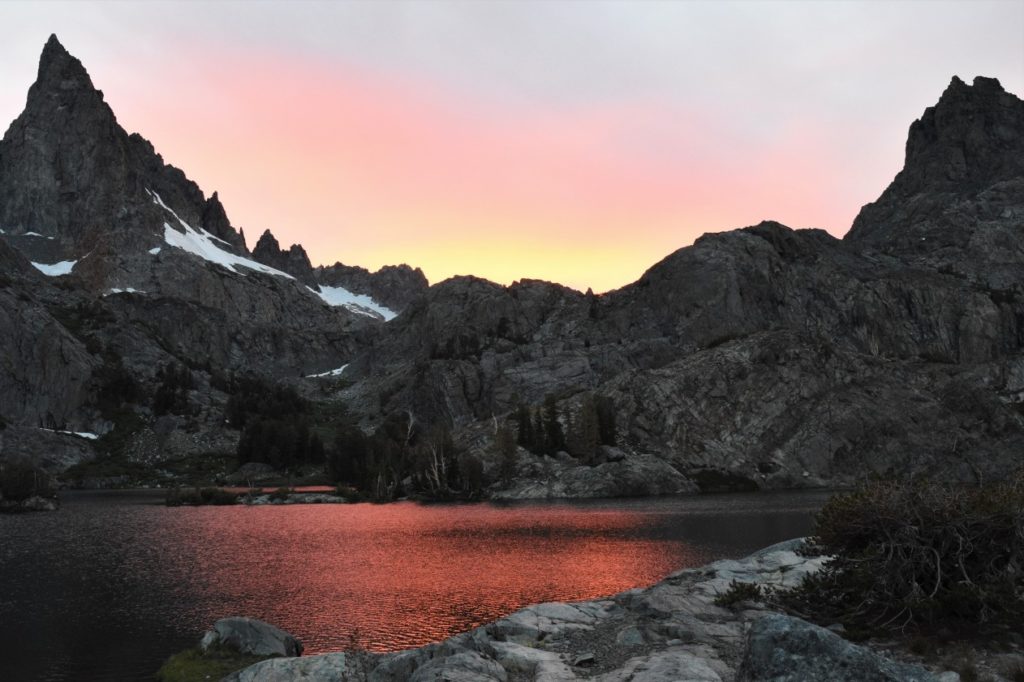
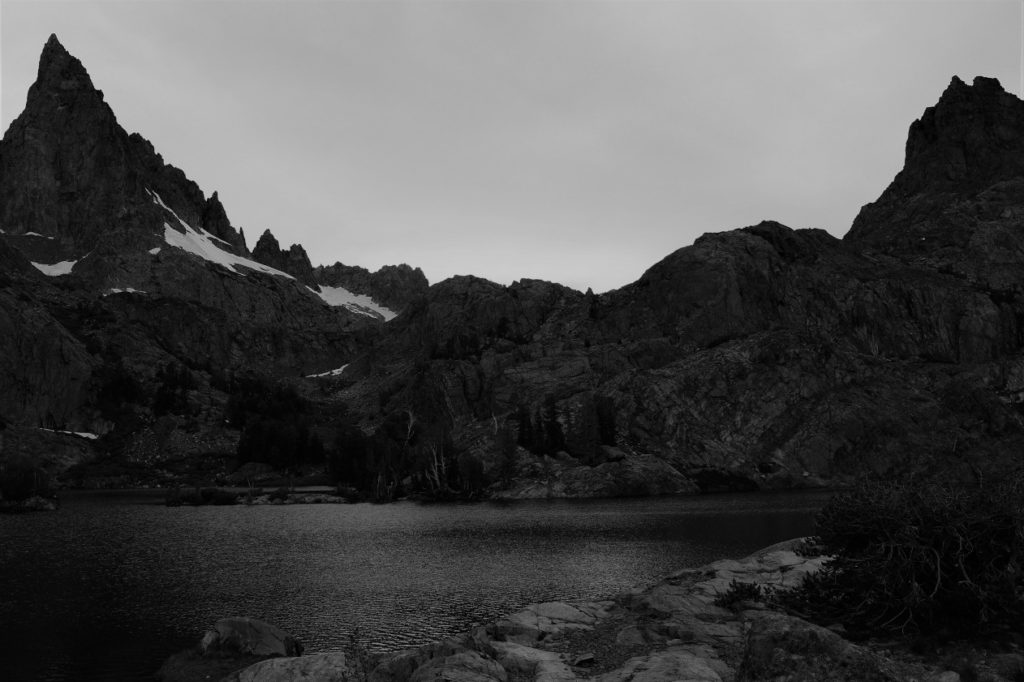
I instantly recognized the Minarets and Mt. Whitney photographs from the Ansel Adams collection as shown on Google images. I took the very same shots of Whitney on the ride up. The profile of Whitney and the island, the lake, the spires of the Minarets haven’t changed in fifty or sixty years. Ansel Adams pioneered landscape photography. Without knowing it until I looked at his photos, I suppose I one of his students, at least one of the many second and third off, that venture into the wilderness to duplicate his seminal efforts.

Ansel Adams wrote that black and white expresses color better than color does. He took color photos. He liked black and white better. Our compositions of Whitney and the Minarets are all about the color. We took our pictures at sunset and sunrise to capture the reds and pinks and deep yellows captured by the peaks. It didn’t even occur to me to turn them into black and whites. I don’t know if Adamizing a photo forces you to compose the picture differently to bring out all the subtleties of grey. Or perhaps it forces the photographer to focus more on the composition more than the wow. If I don’t have to get up at five in the morning to get a stunning picture, consider me a convert.


Digital changed photography. Ansel Adams used actual film and photoshopped his pictures, so to speak, in the developing lab. If he practiced thoughtful composition, I practice trial and error. I take as many pictures as possible knowing one of them is bound to turn out well. I don’t know if I practice art or luck. The camera provides instant feedback on the composition so I can rearrange compositions over and over hoping to achieve a balance though I have trouble seeing the tiny screen with my very poor reading vision. My camera provides useful lighting feedback when I snap a picture which I use to adjust setting in overexposed areas. I can retake the same picture over and over until I get the exposure I want. If I had the patience, I could stitch together the different exposures to get balance light everywhere in the photo with post processing tools. The iPhones already have an automated setting for combining exposures. I know the better photographers find the compositions and work the equipment much better than I do. The latter is technical proficiency but great artists know their paints and techniques. Is that any different?

Art or not art? Is photography art? Is art something that has to be good to be considered the thing that it is? Ansel Adams seemed to think the former: “You make a picture, you don’t take it.” So is my digital photography art or trial and error? I take pictures of a flower or a mushroom or an interesting form or an interesting landscape. I pick out the best one and crop out the noise. Then, I let nature speak for herself. I don’t have an online following to please. In Ansel Adams terms, I am the two people in the photograph: the photographer and the viewer. I like being at both ends of the good pictures.

John Muir.

As much as I like to take the pictures, this is also a backpacking trip. My gear includes a whisper lite camp stove with canister of white fuel, bivy, mattress, sleeping bag, tarp, water purifier, ultra light pots and pans, a ultra-heavy ranger issued bear canister, clothes, a rain coat, aluminum walking sticks which double as tarp poles, inflatable pillow, camera, two lenses, tripod, extra batteries and memory, two energy bars, three freeze dried meals, a lighter, and a quart of water. I have difficulty starting the stove. The stove provides a tiny well for fuel to prime the element for smooth burning. The problem is that the fuel spills while attaching the fuel canister to the stove. I have more gas on my hands and the ground then on the stove. I half expect to go up in flames when I light it. The mattress has a leak so I’m basically sleeping directly on the ground. I’ve chosen a soft enough spot and cleared it of rocks to make due. Everything else does its job. I stay warm and sleep well in the bivy. No bears test the integrity of the canister.

We cover sixteen miles in two days climbing 2500 feet in altitude to almost ten thousand feet with fifty pounds of gear. The eight mile trip up the trail takes over seven hours. The trail saves the steepest grade for last. It’s a great feeling to climb over a small ice pack and a rock lip to finally see Lake Minaret poised in front of the largest Minaret. We choose a campsite at the edge of Lake Minaret in a great location to take, or is it make, pictures. The forecast suggests the overnight temperature would drop into the thirties. I stayed pretty warm; I doubt the temperature dropped any lower than the upper forties.

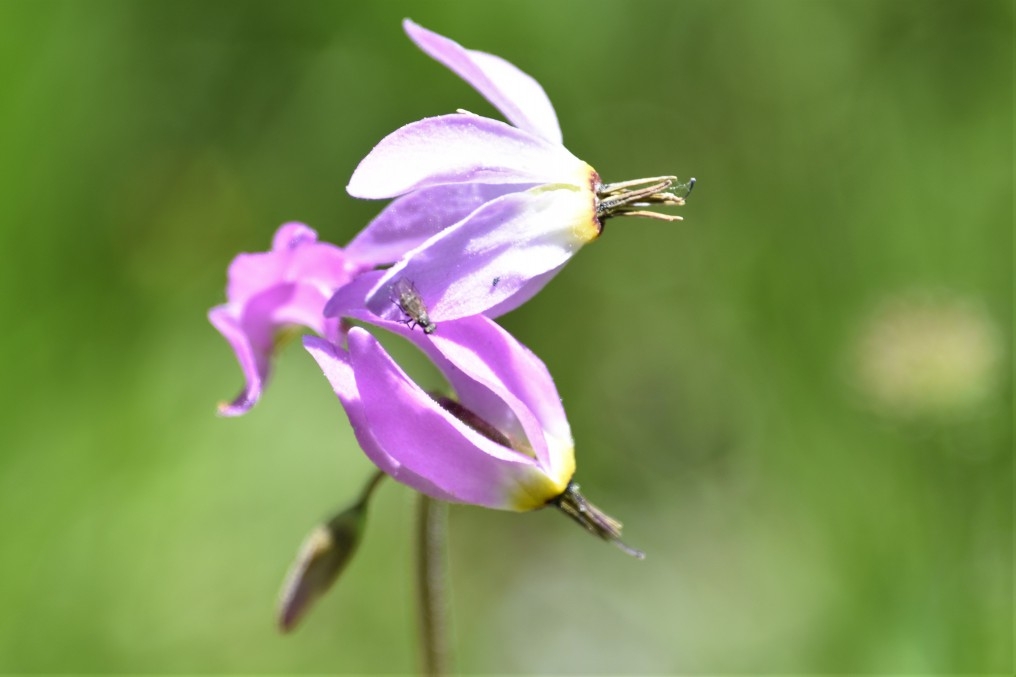
We have one knee-deep river crossing. I grimace in pain from wading through the ice cold water. I can’t imagine how people find any pleasure in jumping into ice cold water. The trail follows Minaret creek. Aside from mosquitoes, the creek has a beautiful cascades and many small waterfalls. Small trout hang suspended in the ever moving icy water. Wild flowers cover the landscape each making its own mini composition. I recognize Indian paintbrush, some variation of golden stars, lupines, shooting stars, something that resembles a poppy, at least four species of grass, purple tube flowers, red tube flowers, white bells and many more. I pick up on the strong sweet scent of sage. I find the plant, pick a few leaves, crush them, and inhale. I love that smell. I see a few mushrooms here and there, white shelf mushrooms growing out of damaged or dead trees. I’m surprised to see any at all at this elevation. The same trip back takes a little over four hours. But then again, I have a battery in my ass, so to speak.

Paradise Lost

Reading Time: 6 minutes

I hike the half mile from the dock to the hotel much to the dismay of the eager transportation providers that aggregate outside the terminal entrance. I pass by a cycle rental shop with a sign and talk to the lady. I use the word shop loosely as the building is a shanty with a couple of scooters and a couple of pedal bikes in front. Behind the bikes, a handicapped man wearing nothing but Capri length jeans sits on the dirt melting a rubber inner tube over a propane fire. She asks me if I am single and tells me that her sister-in-law just hooked up with a man otherwise she would set me up on a date but there are plenty of available women around. Oh, and the scooters are 300 pesos for twenty-four hour rental. So, I tell her I will be back in the morning, I want to rent a scooter to tour the island.

I take a trike ride to the downtown area of Santa Fe to get cash at the ATM, sight see, and to eat dinner. The driver shows me a laminated sheet of the sights of Bantayan and asks me if I want to take a tour. I ask him if he has a scooter and if so, I will hire him to take me around the island. He wants to start at 6 in the morning but I won’t promise anything earlier than 8.

Jerry, my driver from the night before, waits outside the gates of the hotel. The management runs the hotel like a compound with a sliding gate and a guard at the entrance to the access road. As we walk over to the rental shop, I ask Jerry for a fair price and he says it’s up to me. I tell him pro bono but I don’t think the joke works. I say how does a thousand pesos work? That’s twenty dollars for a full day’s work. Somebody later tells me that he had a really good day.

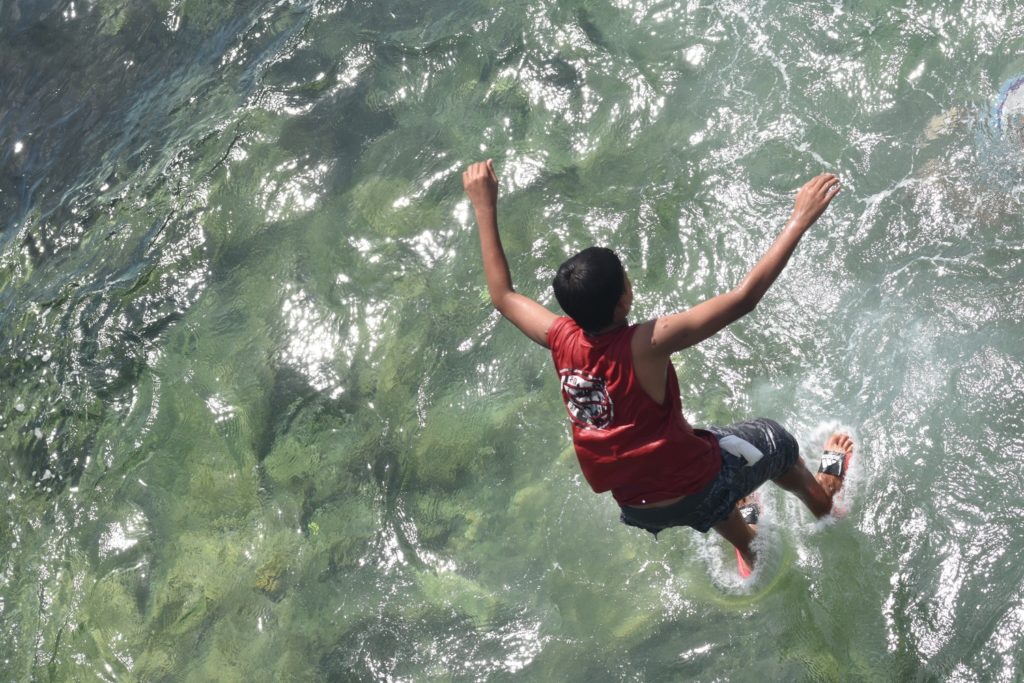
Our first stop is ten kilometers to the Nature Park. We stop on a river crossing for photos. I take some pics of three boys jumping into the river from the road. They look like they’re having a good time beating the tropical sun by jumping in the water. The road is more of a miniature truck trail than a road. I actually drop the bike at the entrance to the Nature Park, as I follow Jerry left to overtake a trike, but then he cuts right, crossing directly in front of its path to get to the entrance. I slam on the brakes knowing I will not be able to make that cut without getting run over. I hit loose gravel and the bike drops from under me as I come to a stop scuffing up the bottom. I do not fall, I’m stand over the bike holding it up, so that at least nothing other than the bottom gets damaged. Jerry’s bike doesn’t have a turn signal or mirrors. For the rest of the tour, Jerry considerately uses hand signals to give me a little warning.

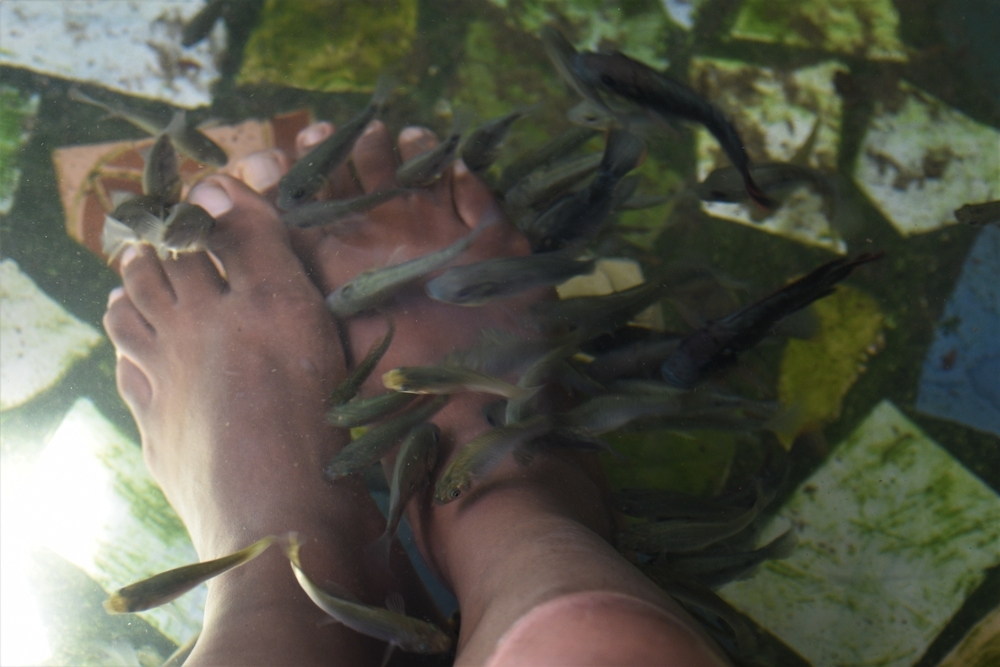
The Nature Park doesn’t seem so, it’s more like a resort just a little bit off the beaten path with cabins, conference rooms and a nice swimming pool. Its one natural feature is a fresh water pool in a cave. I take a dip in my skivvies and then take a few pictures. At the fish spa, I sit with two Aussie girls from an NGO attending a conference on clean water, while little fish clean the dead skin off my submerged feet. It takes a few minutes, but the tickling and laughing turns into a tingling sensation as I get used to the hundred nibbling mouths.

We drive another fifteen kilometers to Kota Park at the far north end of the island. We stop on the way for a liter of purple pepsi for Jerry’s thirsty bike. The little crate of purple pepsi in liter bottles at the window store is the roadside gas station. Don’t drink the purple Pepsi. The cove at Kota park has a cement pier out onto an observation tower in the water that doubles as a dive platform for little kids. The little kids ask me for their “monies” as I walk out onto the deck taking pictures. I don’t give them any. I don’t much care for the demands. The park itself contains the remnants of the walls of a fort but basically is nothing more than a black asphalt wall. The entrance is gated and locked so not much to see. If I would have known that it was also called sunset park, I would have come back at, you guessed it, sunset.

We drive the twenty five kilometers to the town of Bantayan on the main road but never going fast enough for me to lose my baseball hat that I wear in lieu of a helmet while driving in the heat of the sun. At Bantayan, we stop at the Peter and Paul church, witnessing an in progress wedding. The heads of the friends and families turn back frequently looking for the bride down the hundred yard runway. The bride will have a long walk to reach her prize. We don’t stick around long enough to catch a glimpse of her.

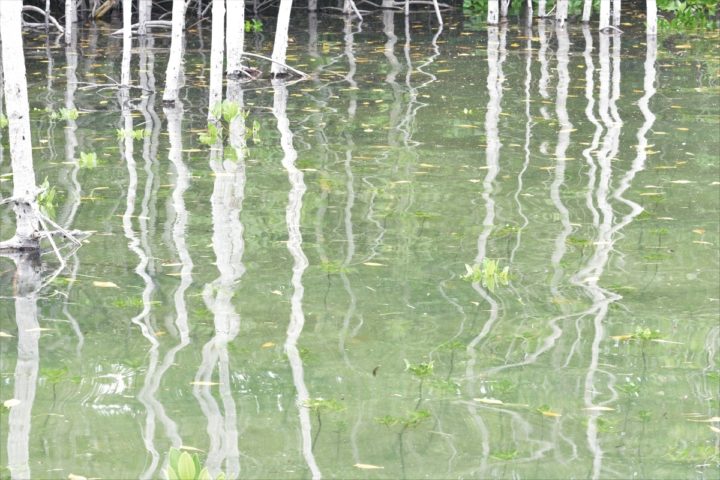
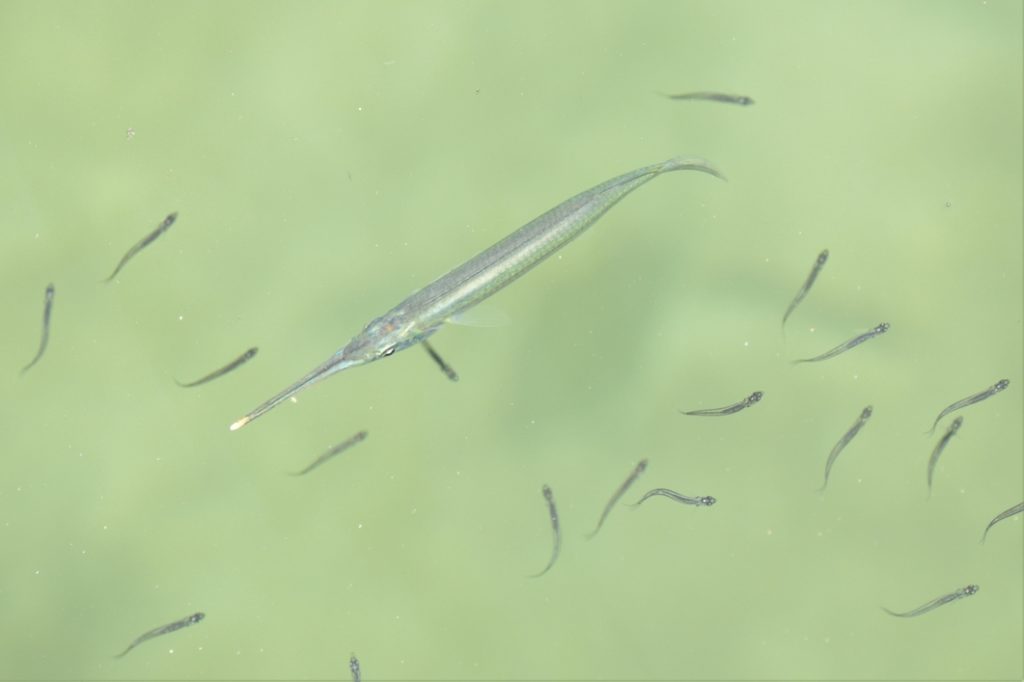
Outside Bantayan, we turn off the main road to the mangrove forest. The roads here on out resemble unpaved sidewalks or wide trails more than anything I’d call a road. The mangrove forest is a 650 meter bamboo walkway built over the water meandering through the mangrove trees. The trail features a tower and covered sitting stations for observation and rest. Little needle-nosed fish and fish with yellow and black horizontal stripes that makes them look like a dart board from above cruise under the mangrove trees in the shallow water.

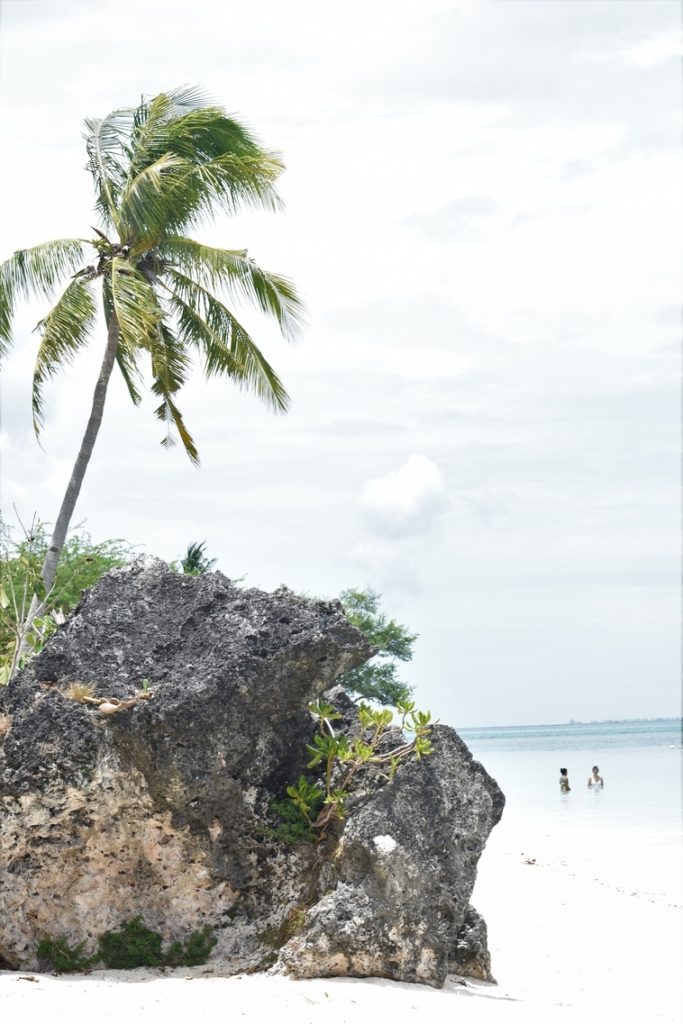
The off road adventure continues as we drive to Paradise Beach. I am greeted by an attendant that says “Welcome to Paradise”. I think my paradise features a hot lady instead of a trike driver, but you can’t have everything, I guess, though I am not sure why. The sand is almost painfully white, the water is bath-water warm, and the waves nothing more than the small ripples of a stone thrown into a pond. I rent a mask and snorkel. The most exciting thing I see is a fist size brown jellyfish from which I maintain a careful distance.

Having lost paradise, we stop at Athena’s for lunch sharing a platter of crab, fish, scallops, shrimps, and fried squid at my expense, which so far, is the only halfway decent seafood meal I’ve had in the Philippines. The shrimp is sweet, fish flaky, scallops delicious, and the crab is crabby. The restaurant is a large open air roof only structure facing the ocean across the dirt road that we rode up on. For a restaurant off the beaten path, it seems to have plenty of customers keeping the three waitresses busy. After lunch, I walk over to the ocean and take the ten foot dive off the rocks into the waves where a bunch of teenagers congregate on concrete stairs leading into the water drinking hard alcohol from a quart size bottle that they are passing around.

We drive on to Ogtong Cave, which is actually a very nice resort with a little hole in the ground cave. A Filipino man from Davao informs me that Mindanao is safe for travel as we wade back thirty or forty feet in the chest deep water to the farthest reaches of the cave.

The last stop on the tour is the sand bar on the south shore beach of Santa Fe. I take advantage of the photo ops and the sparsely populated beach before ending the tour and losing paradise once again getting eight hours, 75 kilometers or so of riding, two dips in fresh water caves and two dips in the ocean, lunch, site-seeing, a hundred or so pics, and fish-cleaned feet for my thousand peso adventure. At least you have to find paradise, before you can lose it.

Riders on the Storm

Reading Time: 7 minutes
"Into this house we’re born
Into this world we’re thrown...
Riders on the Storm"

The Pacific Ocean gave birth to Typhoon Haiyan on Saturday, November 2nd, 2013 as a low pressure area in the Pacific slowly gathering strength as it is headed on a collision course for the Philippines. The Filipinos are no strangers to typhoons, but nothing like Haiyan has passed through here before. Kimdy, is a very pregnant and young fifteen years old. “At the time, I didn’t worried about that typhoon, because i thought its not coming through. I forgot when did i first find out about the typhoon, but i think before Margu was born. On November 7th, I had more urgent matters to worry about. I was at a Birthing Center …”

Kimdy lives in Bogo. Bogo is located in the northeastern coast of Cebu province, on the principal island of Cebu. The island of Leyte to the east, shelters Cebu from the open waters of the South Pacific.

On November the 7th, the day before Haiyan makes landfall in the Philippines, Kimdy goes into labor. Kimdy goes to a birthing center staffed by midwifes. “the Midwife is a Lady , shes very fat , she has 5 kids already , shes a nice and good midwife.” Birthing centers are the cheap alternative to hospitals. “Birthing Center is separated from the hospital , of course we need to pay in the Birthing Center after we got delivered the baby , we pay before 5000, its not near to the hospital.” An obstetrician typically remains on call should complications arise.

With Haiyan bearing down on the islands, Kimdy and her family are focused on the delivery. “My mom , my dad , my sisterz and brotherz are there when im delivering margu. There setting outside waiting for me to get delivered the baby. My delivery is fine and thanks god its a normal delivery, and im happy because i did it. Yes, Margu was born Nov.7, 2013 before the typhoon Haiyan was come. She weigh six pounds, shes really small and cute like her mom.” (NOTE: The last comment about being cute like her mom is the opinion of the mom). “My whole family was there when im delivering Margu , and happy because they supports me there in the Birthing center, they did not leave me there. I had a natural birth without the need for a CS. I’m thankful and super bless, because if its not natural birth, im scared to be CS and no money to pay for the hospital bill”

Needless to say, Kimdy does not have health insurance to cover any of the expenses should anything go wrong. Usually, after a baby is born, the mother and baby will stay in the birthing center. The medical staff will screen the baby for health. “When you delivered a baby, you need to stay at the Birthing Center for 24 hours, before you can go home.” Haiyan had other plans for her new family. “Her health that time i dont know if shes fine or not, because she did not try to New born screening, because of that typhoon haiyan, new born screening is really important because it will see if the baby is sick or not.” Only her mom stays with Kimdy and Margu during the screening time.

On November the 8th, Haiyan hits the Philippines hitting the islands at peak strength. Weather observatories report sustained winds of 180 mph at landfall with peak winds to 195 mph, making it the strongest tropical cyclone on record at that time. Words typically used to describe the cyclone are super typhoon, most powerful cyclone on record, monster storm, and perfect storm. Haiyan makes landfall at 5 in the morning on the island of Leyte accompanied by a twenty foot storm surge that rolls through Taclaban, the capital of Leyte, taking thousands of lives.

Five hours later, Bogo takes a direct hit, enduring the full intensity of Haiyan’s winds but the island of Leyte protects Cebu from the devastating storm surge. Kimdy recalls “But sad to say the typhoon comes after Margu was born and thats November 08,2013, i already that time early in the morning because the wind and the rain is really heavy, and until the 10:00 am comes, thats the time that its really worst rain and wind, and we cannot see the outside because of the fogs, and the midwife is already worried that time because the roof is pulling out, and we decided to transfer to the delivery room.”

Fifteen year old Kimdy, her child of less than a day, her mom and the midwife scramble seeking a safer shelter in the midst of the deluge and apocalyptic winds. With the hospital tearing apart, the midwife takes the family to her house. “Then the midwife decided again to transfer to her moms house because its concrete and not easy to push away from the wind, so we run to go out at that birthing center, we dont know what to do but just run, we’re scared because of the flying roof, and we cannot see the road. My mom carry Margu and run also and we dont know that theres a hole on the road my mom was fall down and also the midwife, and Margu was fall down as well. I’m worried because i thought Margu is died already, because she fall down at the water. When my mom get her, thanks god shes alive and crying, im very happy that shes strong enough to live in this world, we run until we came at the midwifes mom’s house. I dont know that time whats happening to the other people, because you cannot see anything because of the fogs and you cannot go out because of the strong Typhoon Haiyan. When we transfer already were all crying already and praying that lord please guide us, were just crying and crying.”

The family waits out the storm in the concrete home which endures the winds of the typhoon. “Margu was sleeping on the bed, like she dont know whats happening. The Typhoon Haiyan was passed away around 5:00 pm in the afternoon, and when we see the light already, and no rain, where very happy and feeling safe that thanks god were safe and still alive, and living in this world.” The rest of her family rejoins with them. “When the storm passed away my dad and brother is coming in the midwifes moms house to check if were fine or ok. He went to Birthing Center but where not there, so he found out where we transfer. So when we see my dad, and we call him. But sad to say as well, our house was wash away from the typhoon Haiyan on that time.”

The family has to find a place to stay. “Then that time we dont have yet house to stay, so my mom has a friend, and my mom ask permission if its ok for us to stay there for the mean time, and thanks god. My moms friend allow us to stay there. When go home around 6:00pm and outside is very dark no ligh , no electricity and no water for us to drink.”

On November the 9th, according to Wikipedia, Typhoon Yolanda destroyed almost everything from infrastructure to agriculture, 90% left homeless and thirteen died in Bogo, among more than 6,000 fatalities in Central Philippines. City Hall was one of the structures damaged: its roof got ripped off, its windows broken and other parts of the building also affected and devastated. Kimdy remembers “When in morning we see the all Bogo that the houses is flush away by the typhoon, and the trees are falling down.”

First responders and emergency response teams arrive. “Many foreigns and israels come and give relief goods and water, so we thankful that we have food to eat, and we are thankful that there are some people that has a good heart helping us to recover about the Typhoon Hiayan.”

In the days that follow, American and Israeli relief teams came in soon after the hurricane passed. Kimdy says, “My family members went to the baranggay to get relief goods. We just go to our baranggay, and we fall in line and they give water and relief goods that came from the americans and Israel.” A barranggay is the native Filipino term for village. She continues “The foods that they give is like can goods, like Sardines, then they give Noodles and Pancit Canton, and 3 kilos of rice.” Pancit canton is a stir-fried dish composed of egg noodles, meat, poultry or seafood and a medley of vegetables, popular among the Filipinos. “The relief teams distribute water.”

Margu and Kimdy had many challenges in the weeks that follow. Kimdy reports “When she was a baby, she only drink my breastfeed for one week because she got phuemonia, because no electric for 2 months. And after she dont drink my breastfeed, so im worried already. Cant buy milk and diaper for margu. She tries to drink the water of the rice when it boils. I will get it and give to her to drink it. I’m crazy, i want to commit suicide because i dont know what to do.”

The relief effort did not provide clothes. “We have our own clothes to use , and they only give relief goods. And for diaper i will just use my shirts, and after i will wash it. And if its dry i will use it again for her.”

Two months later, in January, rescuers continue to discover bodies. For the most part though, over the next two months things return to normal. Kimdy is able to get food for Margu. “We buy the milk in the open store here in Bogo, She only drink milk before.” After two full months, basic infrastructure is restored. “Returns to normal, after 2 months when the water and electricity coming back already.”

Kimdy’s parents and their siblings sell the shared property they lived on before Haiyan. “The house was destroyed because of the typhoon Haiyan, thats why they decided to sell it. So that they can build there own house to sta , and so that they have there own lot. …then after my moms brothers and sisters decided to sell the Lot of my grandmother its 1500 sqm. They sale it to 7 million i think , or 6 million and they divided into 6, thats why my mom has her own house now and lot, she buy when she gets the money already from the lot that they sell.”

Margu is finally officially registered though she lacks the records for her shots and birth. “I dont have any shots for margu, yes its lost, because its wash away from the typhoon Haiyan. Yes, Margu has already a Live Birth, she was Registered late.” Margu, a child of Kimdy and survivor of the super typhoon Haiyan, is officially born on November 7th, 2013.
No Budget

Reading Time: < 1 minute
No Budget,
For the morning meal
Not even with coupons
That make a great deal

No Budget,
For chocolatey sweets,
That tease my taste,
Unaffordable treats

No Budget
To escape the hot sun,
To swim in the wide ocean,
To have some cool fun

No Budget
Nothing is Free,
Not even to Walk,
Down to the Beach.

No Budget
To watch online TV,
Or to work on my laptop,
Given to me

No Budget
At the cinema to see
Nothing but the poster
Of a hot new release

No Budget
Though disk space is free
To compose photos
To send to thee

No Budget
To write or to draw
To cultivate thoughts
That will remain raw

No Budget
To stare at the sky
The sky hides its beauty
Until I can buy

No budget
For iron in my diet
Craving crispy dirt and paper
Desperate enough to try it

No Budget
For My Epilepsy
There is an upside
the seizures might kill me

No Budget
It just isn't fair,
I even get charged,
To breathe in the air

No Budget
A dream isn't free
Money I need
To live transactionally

Malapascua

Reading Time: 4 minutes
Deep Dive

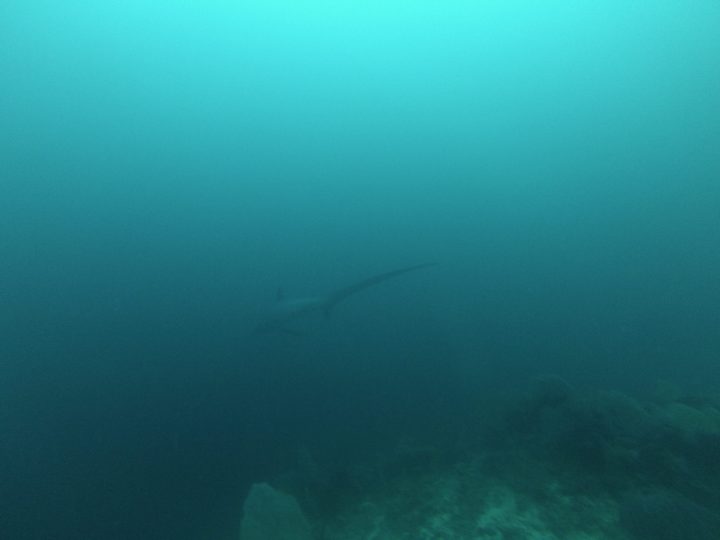
I love jumping into the ocean water here, even at the first light of dawn, so warm and pleasant. The current and chop reduce the visibility but I can still see other divers thirty or so feet off in the distance following their mooring ropes down to cut through the current to the relative stillness near the bottom. We do the same. Once past the mooring rope, we fin our way over the edge of the mount. The water temperature cools noticeably but not uncomfortably. The visibility is dimmed by the depth and the thick thunder clouds to the east, obscuring the morning sun. But I think to myself, its appropriate for giant sharks to emerge from the shadowy depths.

The thresher obliges, coming up out of its shadowy depths as scripted, swimming towards us, then turning to profile modeling its long flowing tail and then away, the long tail waving its goodbye like an undulating banner in the wind. I kneel behind a rope on a sandy ledge off the mount at thirty meters; the rope placed so that divers don’t spook off the sharks. Another thresher emerges from the shadows. I look into its black plate eye. I don’t see the cold lifeless eyes reported by Quint, the charismatic and quirky captain from the movie “Jaws”. Instead, I see the look of bewilderment. Maybe because its small mouth hangs open. But that is my anthropomorphism. Inside, I think maybe its smiling because the mount serves as a wrasse cleaning station or because it is satiated after a long night of killing. The second shark turns away and disappears into the shadows.

The dive master gives me a nitrogen narcosis test. I’m not feeling loopy and he later tells me, I have good nitrogen tolerance based on his finger test. I attribute my tolerance to a lifetime of thinking under the influence of alcohol. No more sharks appear on the depth-shortened visit. We ascend cautiously by self-imposed switchback along the wall of the mount to let the nitrogen exit the blood leaving the shark infested waters safely and nitrogen bubble free.


  https://drive.google.com/open?id=1o0rGoQEjPjs6guhSuvOHkTebHjh1OOkv

Out of Sorts

The current is strong. I grab the guide line before it drifts out of reach. The mask is digging painfully into my forehead. I try to adjust it. I think I make it worse. I’m not breathing too well either. I have some sinus congestion, I think. The masks digs deeper and deeper into my forehead from pressure as we descend. I take the mask off, adjust it, put it back on, wasting a lot of air trying to clear the mask. I’m struggling against the current. The dive master is trying to point something out with his stainless steel rod. I try to look, but I’m too distracted by the equipment. I’ve already burnt through half a tank before I’m sort of at ease even thought the damn mask continues to burrow into my forehead.

The dive master searches for a miniature seahorse that matches the exact purple of the fan. I have to look really close because the wriggling thing is so small but I can’t really see it clearly without my reading glasses. I’m fighting the current and I’m already running out of air. We ascend, take our five minute recovery, and back onto the boat. I’m totally frustrated at the twenty minute dive. Tanya says she can see the red mark on my forehead left by the troublesome mask. She’s a marine biologist so comfortable in the water she could probably stay down for two hours on what I just burned up in twenty minutes. We aren’t designed for this environment and when the equipment doesn’t work right, its an unpleasant experience.

Recovery

I try another dive (and then another). I can’t go out on a bad note. Breathe in, breath out. It’s not a mantra. It’s life and death. It’s focus. It’s calm down or burn down your air supply in another frustrating twenty minute dive. With a better mask, a clearer head, and no current, I feel a thousand times better than before.

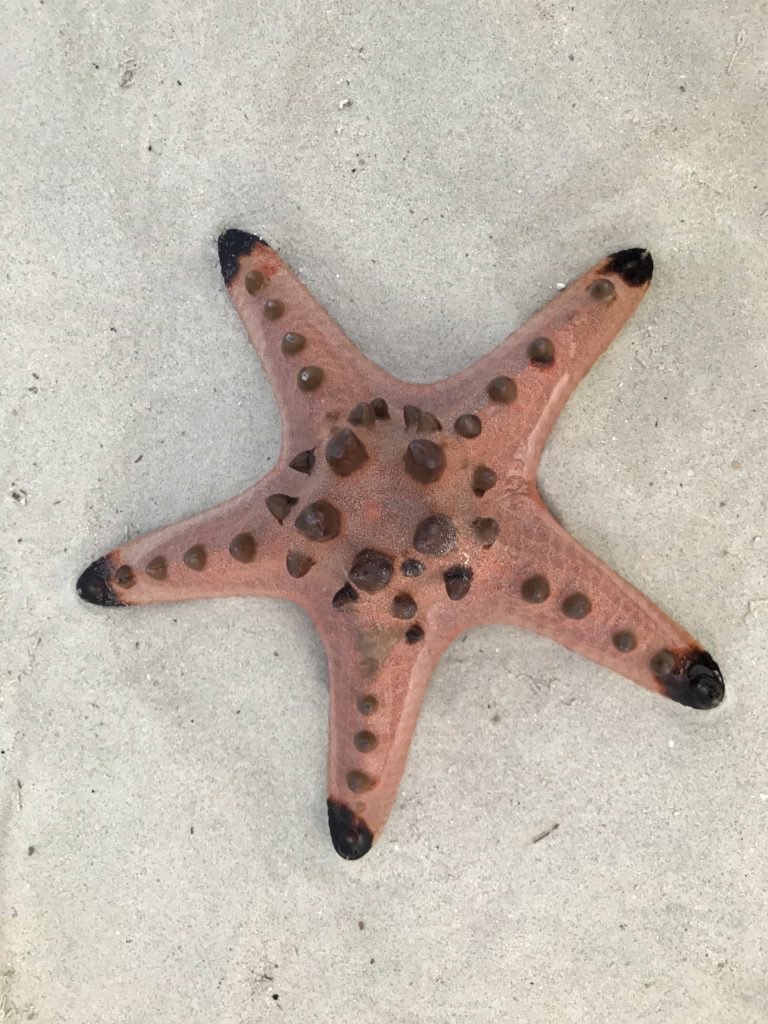
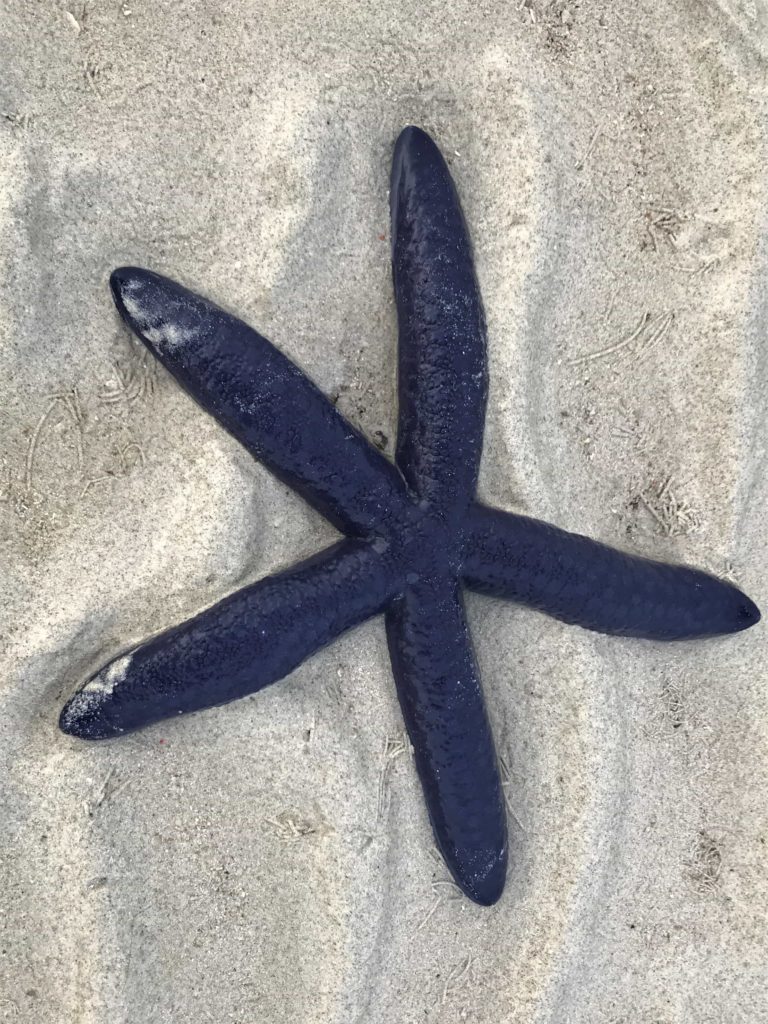
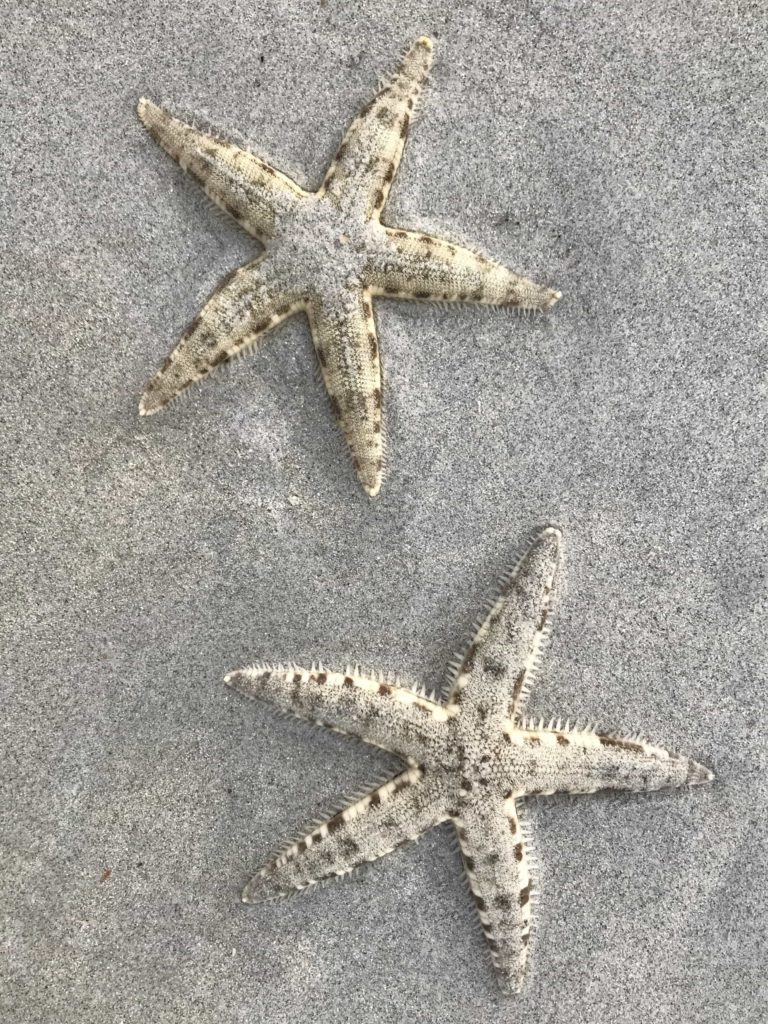
At twenty meters, I’m able to take in the environment and scenery: puffer fish, lion fish, a mantis shrimp scurrying along the sand at the base of a sea wall before diving in for cover, a cave with thousands of little fish floating in the entrance and a white frog fish hanging upside down from the ceiling, corals, urchins, star fish, a pipe fish, a miniature seahorse that I can barely see, a centipede looking thing in the coral, a nudibranch that saturates a bright blue and orange in the dive master’s torch. Without the torch, the colors don’t pop because of the depth and the cloud cover. I’m relaxed this time so the air supply lasts much longer. The dive ends with the five minute safety stop at the end of the dive flag. Satisfaction trumps frustration every time.

Pictures of Sand

Reading Time: < 1 minute

When I close my eyes to go to sleep, I can feel the wind and sand blowing in my face like a day spent on a boat or in the waves, when your body has left the water, but your mind hasn’t, even in your dreams.

I can’t open my eyes until I make them tear as the sand grains caught between my eyelid and eye abrade the tissue. I run my hands over my 40 grit hair, dig the grains out of my ear, and rub the sand off my eyebrows.

The dune tendril drifts across the road forming a tapering spine. The car slips over and through the shorter end of the road drift.

A sheet of braided sand hugging the dune falls horizontally like a roaring waterfall turned on its side.

The migrating sand erases my tracks and memory.

Heroic brittle brushes with bright yellow flowers weather the granular assault.

Blowing sand races off the edges of dunes in plumes that persist like the spokes of a spinning wheel.

The sinking sun peeks out from behind a cloud turning the dunes into a desert quilt of shadow and light.

A solitary bush clings tenaciously to the side of a mountain of sand.

A ridge line dips and crests over piles and mountains of sands disappearing into the horizon.

A bush kowtows in humility to the power of the wind and sand.

A silhouetted figure stands on a far peak fading into the dune.

Dancing With Traffic

Reading Time: < 1 minute

Six lanes of traffic in two lanes of road, the smell of burnt oil and exhaust. Small goats tied to ropes mowing the sides of grassy roads, a man walks his black steer on a rope, a dog gnaws on its back in the silty sidewalk. Face masks of neoprene, a girl rides side saddle, a little girl sandwiched between her father and mother, a boy in a powder blue tshirt drives three girls in pink tshirts, an endless parade of fashion and configuration. A box of pizza held by its rope from the brake hand, a bundle of rebar oscillating over the handlebars, two cylindrical plastic garbage bins secured on both sides of the rear wheels. Men sit in shadows at the foot of doors of wooden shops. Some stores are nothing more than tables in roofed recesses. Scooters slip in and around over-matched and under-powered motorcycle-driven taxi cages. Swarms of scooters dance in and around cars and sugar cane trucks and yellow buses beeping their way into oncoming traffic in the bustle of downtown midday. People crossing in invisible breaks in the flow, vehicles shooting in from sidewalks, driveways, and side streets. No traffic lights or stop signs. Just enough rules and courtesy and caution to make it work. A study in organized chaos. But no time to study, only time to react, dancing with the traffic, avoiding my own bug splat.

Alter Trons in Iotic Space

Reading Time: 4 minutes
“Congrats on the new job. what chu goin’ be doin’ ?”

“Creating alter trons in iotic space.”

“Wow! I’d probably say that sounds like a lot of fun if I understood a single word you said. Altertrons? In what space?”

“Iotic Space.”

Grows impatient. “Which is?”

“Well, you know what robotic is, right.”

Nods ascent.

“Iotic is just the internet of things, IOT, with ic added. Anything to do with IOT, iotic. Like robotic is anything to do with robots. Iotic space is the integration of data that comes from iotic devices. Your house might be an iotic space with all its devices. You can share with your neighbors to make an iotic community. A space of spaces. You can make a space by combining anything that provides data.”

“I sorta get it. I must be getting old. I need an online class just to know what your job description means. So what was the other thing? Alter, altertrons?”

“A Tron is the representation of a person in cyber space.”

“Oh. Tron. Wasn’t that a movie back in the 80’s?”

“Yeah. Jeff Bridges and the Caddyshack girl, Lacey Underwear.”

“Lacy Underall. Ha, I do know something you don’t!” Gloats a little. “Sorry. Please continue. A tron?”

“So a Tron is the integration of all your data. The GPS from your phone. Where your used your credit card. All your searches and clicks on the internet. The profile from the thermostat in your house. Your cyber footprint if you will.”

“And alter is like alter ego, but alter Tron?” Pauses. “So you make alter egos in cyber space?”

“Like I said, I create alter Trons in iotic space. I focus only on the footprint you leave on IOT devices.”

“I have to ask the obvious question: Why?”

“Did you ever see a movie where three different convoys of cars all drive off in different directions? Only one has the gold or the president or whatever in it? Same idea. Just in cyber space.”

“Iotic space.”

“Yeah. You catch on quick.”

“Isn’t a fake id illegal?”

“It’s a grey area. You know the NSA captures every byte of data in the public domain and quite a few in the private domain. All unconstitutional. Stored somewhere in Utah. Think about it. Your phone tracks you where you go. Your TV knows what you watch. Your refrigerator knows what your eat. How do you know the NSA isn’t monitoring that smart thermostat to know when you’re home or storing all those security clips of your front yard you think only you can see? On demand decryption of all your AES256 data is just around the corner with quantum computing. When the NSA cracks that, if they haven’t already, what little privacy you have left is gone.”

“And you sell these alter Trons? Who would buy such a thing?”

“A lot of people. And the more the merrier. If you can’t leave no trail, the next best thing is to leave so many trails that no one can pick yours out. The bigger the network gets, the more effective it gets. One tweeter is useless, two is better, a million is an economy onto itself. Every person’s alter Trons can interact with other people’s alter Trons creating more and more false trails. I can invent all sorts of plausible fictions. I can have your phone visit someone else’s house so it looks like you were there. I can generate fake heating data to make it look like you were home. Half your alter Trons can be at home, the other half out on the town visiting their alter Tron friends.”

“But you can only have so many alter Trons, right? A couple of alter egos isn’t going to stop the NSA.”

“Here is the genius of it. It’s a scaleless network.”

“Shoot. I should of quit while I was ahead. What the F is a scaleless network, if you can tell me in less than a minute?”

“Nodes on the network do not just join randomly. They tend to center around hubs. The bigger the network gets, the more resilient it gets. In a random network, attacks on random nodes can break the network. In a scaleless network, you need a directed attack to knock out a couple of key hubs. Easier to defend.”

“Seems completely whack to me. It’s like… it’s like, your building the opposite of the matrix. An inverted matrix. Everyone’s dying to get in because its fake, not to hide from the machines but to hide with them and from each other.”

“I suppose that’s one way of thinking about it. The agents certainly hate it, the ones in the real world. I certainly don’t want the NSA breathing down my back. I think the corporations hate it too. It skews their algorithms. So, if you call their algorithms the machines, I suppose you could say the machines hate, the ones in the real world, hate it too.” Reflects for a moment. Nod his head. “Yes! I like it! Good analogy. An inside out matrix.

“Whack”

“I think just the natural evolution of things. You steal people’s privacy and attention and intimacy and they will fight back!”

“Hardly seems natural. What’s the name of the company?”

“Negative space dot com.”

Types it into his phone. “Hey, that URL takes me to some photography site.”

“Don’t spell out space, just put in a space with the space bar.” (negative .com)

“I get it. Cool. Using negative space in the name sort of. Hey, it still doesn’t take me to your company. It takes me to a search result with a list of a whole bunch of Negative something or another companies.”

Smiles. “That’s who I work for. Alter coms in iotic space. And you’ll never know which one.”