MJhiddenJmessageQQD
EWmeantTforIyouRxA
VQifVsomeoneJstealsVitHlS
STwhatIwillHyouZdo?wA==
Cyber Poetry
Reading Time: < 1 minute
MJhiddenJmessageQQD EWmeantTforIyouRxA VQifVsomeoneJstealsVitHlS STwhatIwillHyouZdo?wA==
Dear Liza,
I’m not so sure a visit to Bubble Dome is such a great idea. It might sound like a great vacation spot. The temperature is a comfortable seventy degrees. Room temperature. It’s a pretty big room, at over ten square miles. But it’s still a room. The weather never changes. It never rains or snows or gusts or anything else on the inside.
There is not much to see. I can walk anywhere in the city in less than an hour. We have potted trees spaced out evenly on the walkways. Everything else is a building.
I live in an apartment on the eighth floor with my mom, dad, and brother. It’s 72000 square inches, one of the largest in the building. We have a garden on the roof and a fruit tree spliced with oranges and lemons and limes. I like it when we get to eat exotics. For a class trip, we went to the hydroponics tower. Each floor grows rows and rows of food. It’s where most of our food comes from. There is an enclosed aquarium outside of the dome. Our teachers told us it is filled with tilapia but the water is so murky I couldn’t see them. I hate tilapia. My mom says I have to eat it because it’s the only source of complete protein in my diet.
The outside is so different. Nothing but dirt and sand as far as the eye can see, as barren as the surface of Mars on the outside, judging by the pictures. Sometimes I can’t even see the outside through the thick ozone and methane and hydrogen sulfide and carbon monoxide haze that hangs over the dome. My teacher says it’s as smoggy as the atmosphere of Titan and just as lethal. Even if you could breathe the atmosphere, the heat would cook you. It might as well be the surface of Venus.
Someday, I will be old enough to walk outside the dome in a spacesuit. I can’t imagine what it would be like to walk for hours and to feel like you are not getting anywhere. Or to look back and see the dome, my whole world, as just a little bubble on the horizon, as I’ve seen in pictures.
It would be awesome if you could visit, but I think you would get bored pretty quickly. And to be quite honest, I think I would rather visit your planet. There just isn’t that much to do or see here on Earth.
Authors Note: I was thinking about something like the planet Juxta for use in a book. I am intrigued by the idea of making reincarnation into a biological function and seeing where it would take me. Then I watched the Netflix series “Alien Worlds” and decided to make a post. If you know the authors of the series, please forward it for an episode in the next season.
In the planet Juxta’s primordial past, Amoeba begat amoeba and amoeba ate amoeba in a never-ending cycle of birth and life and death on the bipolar planet. In the burning season, when Juxta was at its short but scalding perihelion within a half astronomical unit of its sun, all the amoebae dove deep into the soil to escape from the oven-baked surface crusted like a burnt loaf of bread. The oceans boiled and filled the skies with a Venusian-like blanket of steam and clouds smothering the planet in its supersaturated embrace. The tidal forces of the nearby sun activated the interior and the planet reshaped itself with volcanoes and plate movements. Amoeba begat amoeba and amoeba ate amoeba in the depths of the ground of Juxta.
Juxta moved quickly in its orbit when close to the sun heeding Kepler’s law of equal area in equal time. As Juxta retreated from the sun into the recesses of its solar system, the skies poured back into the ocean during the flooding season, eroding and sculpting and shedding the heat of the burning season out into space. The amoebae emerged from their hiding in the dark polar corners of the spherical planet to move about Juxta’s reemerging oceans and rivers and lands. Amoeba begat amoeba and amoeba ate amoeba in the surging waters of the regenerating planet.
In the slushy season with the sun fading to dim light in the distance, the planet turned cool and snow formed first at its poles. The icy polar tentacles of each pole reached toward one another like the magnetic lines formed by iron filings in a dipolar magnetic field. The migration of the amoebas began. Amoeba begat amoeba and amoeba ate amoeba on the great migration running from the icy polar regions to the fading warmth of the temperate zones and on toward the tropical, equatorial belt.
In the icy season of aphelion, when the planet’s orbit reached over 30 A.U. from the sun, reducing its image to nothing more than a pinprick in the distance, Juxta turned into a giant snowball. Some amoeba took time out from the endless cycle of begetting and feasting, hibernating as icy crystals. The creatures that remained behind thrived when free of predators for a brief while and proliferated before entering a hibernation of sorts by dehydrating their cells and using an anti-freeze molecule to survive the long cold winter on the surface. Others begat and ate in the depths of the great ocean as all the mobile amoebae migrated to the fissures where the earth had ruptured and renewed during the tectonics of the burning season to survive the long cold winter. Tardigrades.
During the melting season came the great thaw. Juxta shook its snowy and icy coat showing small patches of growing earth that merged into larger patches like a molting Arctic creature piecemeal-shedding trading its white coat for a dark one during the summer. The thin belt of color at the equator grew to a double patty thick sandwich with polar ice buns and finally disappeared leaving a sparkling blue and brown planet. Amoebae migrated back to their warming poles and hibernating amoebae resurrected from their crystalline slumbers. Amoeba begat amoeba and amoeba ate amoeba on the great dispersion from the vented tropical regions to the once again temperate latitudes and ice-free poles.
During the dry season, the sun grew larger and Juxta warmed with each passing day. Snow-capped mountains lost their white peaks. Rivers and lakes dried. The amoebae sought out shade and shelter in North facing slopes and in deep waters and in caves. Amoeba begat amoeba and amoeba ate amoeba, but mostly ate, as they aggregated and fought to follow the vanishing waters deep into the aquifers and underground rivers and lakes of the polar regions. And so it went for eons. The year and the seasons repeated in a never-ending cycle of hot and cold, steam and water and ice, and birth and death.
A billion years passed. And then another. During the Cambrian explosion of Juxta, amoebae and their kin learned to coalesce into aggregate organisms improving their chances of survival over their unallied adversaries, but the only way to survive the burning season was to decompose from their multi-cellular patterns back into their singular cellular selves and dive deep down into the earthen safety of the interior. Slime Molds
When the amoebae emerged from their singular cell sequestration during the flooding season, they would re-aggregate into their colonial selves. The amoebae learned to send chemical messages to other amoebae and those messages differentiated one group from another so that amoebae sorted themselves out into species of amoebae that cooperated and competed in a primeval-soup ecosystem of complex amoebal forms. Amoebal species learned to cooperate with other amoebal species forming more composite species with each colonial form learning to specialize in function like the organs of a complex organism. The patterns of the amoebae become something greater than the amoebae, themselves. An ecosystem and an evolution of cooperating and completing composite species evolved into ever more complex forms convergent with forms one might recognize on Earth. Lichens
The amoebal signaling message of an individual cell was passed from generation to generation. It grew sophisticated enough to remember the same single-celled creatures or their ancestors after the transition of the burning season to create and recreate individuals so they could disassemble and reassemble back into their former selves without chaos and formlessness. And so after each burning season, individuals reincarnated back into their own clones, transcending body and form and season and climate and the harshness of the heat of the burning season, although variation was always inevitable depending on the fortunes and misfortunes of each of its single-celled lives. During the cold and dim icy season, species learned to migrate to their ancestral underwater mounts like salmon returning to the creek of their birth and mostly for the same reasons, though certainly not to die. The emergent creatures engaged in a reproductive process at the level of the aggregated individuals. During sex, two compatible partners would completely dissociate into their amoebal constituents. Each and every amoeba in the pair would replicate. One set of the replicated amoebae would recombine with the partner’s set of replicated amoeba to form two new individuals with new combinations of their parent’s patterns and memories. The original set of individuals would reassemble into their original selves, the whole process as a strange form of cloning and sex passing on new mixes of pattern and meme to the fully grown offspring.
The composite amoebal brain learned to encode the patterns of ultra-long term memories in the replication molecules of the individual amoeba so the memory of patterns and the pattern of memories would be passed from one generation of the individual to the next. Memes and genes encoded together. Memories or fragments of memories would be passed from one generation to the next both surviving the amoebal isolation of the burning season when amoeba begat amoeba and the icy season when partners begat partners.
Culture and memory and generation and year became one and the same driving the evolution of Juxta forward through eon and era, playing out over time like a film of Juxta natural history viewed one frame at a time.
Life adapted to the bizarre seasons and climate and year of Juxta. Complex species, though more accurately described as recurring patterns of interactions between amoeba and other protists, emerged from the fitness functions of cooperation and competition.
After the scorching of the burning season, and as the clouds finished the worst of pouring themselves back into the oceans, the amoebae emerged from the single-celled safety of the deep ground of each pole, sending out cell-smell messages to find their kin and bodily neighbors, of their previous incarnation. As the torrents of rain and flood subsided, the surviving protists reassembled themselves into goo and then back into a facsimile of the creature it once was, filling in missing pieces with redundant cellular replications if necessary to re-instantiate itself, the whole becoming much more than the sum of its parts.
The creature looked about and others like it looked upon him, new yet not, in a new incarnation of itself. The creature found plentiful food in the other creatures it dominated, which had the misfortune of reassembling near its hungry and bellowing stomach. The creature hunted and foraged happily and successfully with its comrades, though even apex predators sometimes fall prey to disease, parasites, other predators, or just bad luck.
The weather turned cool. The creature and its clan undertook the mass migration from the poles to the equators always staying ahead of the worst of the weather. Snow began to fall at the poles and ice appeared on the surface of calm waters. The chill triggered instinctual memories and even distinct memories of past migrations in its previous incarnations. Mobile creatures of all types migrated from the poles toward the equator and from the lands to the sea.
As the long winter fell and the sun looked like nothing but a bright dot in the distance, the creature’s protists reorganized itself to form gills and webs and a bioluminescent organ used as both a lure for prey and a method of communication with the members of its clan like a lifecycle-confused amphibian. It entered the ocean and swam to the spot of its birth, migrating to underwater heat vents like a salmon returning to the spawning grounds of its birth, feeding and growing on the concentrations of life at the vent. Great Animal Migrations The clan aggregated with other clans into an underwater city of aquaculture and society.
When the time was right, the creature sought out and competed for a compatible and willing mate. When the courtship succeeded and a partner was found, the pair engaged in something that we would call sex in the safety of private corners of an underwater nook but would not recognize as such. At the height of mutual orgasm, the constituent protists of each individual released the hold of one another dissolving into an amoebal solution. Each amoeba divided and replicated itself so the organism was at once itself and a clone. One copy of the clone intermingled with one of its partner’s copies, exchanging compatible protists in the process. When the moment of orgasm passed, the protists reassembled themselves such that four individuals now stood where there were once two, two identical as the original and two mixed into something new. The new individuals held mixed memories and features of the two originals after the biological exchange of form and culture.
You may find it difficult to call a full-grown, mentally ready creature your child, but the new mixes would need time to learn their new bodies and adapt to their new memories, having only a half-intimacy of both their parents that could prove both enlightening and uncomfortable to all concerned.
When the smells of the long winter were replaced by the smells of the thawing waters, and the creatures of all species began the reverse migration, a dispersal back to the land and then outward to the poles following the thaw both north and south, the creature and its clan swam back to the land, surrendered their aquatic forms, and began the long walk back to the pole following the warming weather.
When the land dried and the oceans shrank into the clouds and the creatures had long resettled into their polar homes, the creature dissolved itself into a pile of goo which then disbanded, its constituent protists diving deep into the earth as single-celled creatures struggling to survive and thrive to start anew in the next generation.
Authors Addendum: Do you think it would make a good episode? A good backdrop for a book? Let me know. author.mike.angel@gmail.com.
Author’s Note: An Homage to Star Trek: Next Generation. Sorry about the #2, I just couldn’t resist the second-grade humor.
“Away team to the ready room for a debrief.”
The team follows the Captain into his ready room. Each sits in the seat befitting their rank, the Captain at the head of the table.
The Captain turns to #1, who lead the away team. “Report. What did you find?”
“The entire planet has been weaponized. The planet has an incredibly sophisticated sensor net capable of detecting any military movement on the surface, in the atmosphere, and to a limited extent, the exosphere. The sensor net is interconnected in a global network capable of relaying data to any of its command posts in seconds. The network also interconnects to a quite deadly actuator system for the launch of an assortment of fissile and fusile weapons.”
“So the whole planet is a giant weapon system?”
“Yes sir.”
“Anything else?”
“The network generates petabytes of information. They use AIs to process the data for threats and response selection. It is doubtful that we could overload the system.”
“Impressive. The recon reports did not indicate such advanced technology. Do you recommend first contact with the Earth?”
The officers look at one another but none takes the initiative to respond.
“Why the hesitation. From your report, it seems pretty cut and dry.”
Again the officers look at one another and back at the commander without responding.
“#1, I want your recommendation, now. Do we abort the mission?” the Captain demands.
#1 responds without hesitation to the direct order, “I recommend for intervention, not abort.”
“Intervention? Explain yourself.”
“Well, despite the sophistication of their weaponized planet, the weapons aren’t pointed against a potential planetary invader. All the weapons are pointed back at the planet itself. The whole planet is jury-rigged like a floor full of mouse traps. If one goes off, it would basically trigger the destruction of the whole planet.”
The captain squints his eyes and shakes his head to work through his incredulity. “What kind of weapon system points at itself?”
#2 speaks. “My team has a hypothesis, sir.”
#2 clears his throat and continues, “We believe it’s a self-destruct mechanism built because the natives would prefer to destroy their planet before enduring alien rule, just like the self-destruct mechanisms we have on the ship to prevent it from falling into enemy hands.”
“But the whole planet? We would sacrifice to keep others out of danger. If they kill everyone, what’s the point. It is just suicide.”
“Yes, sir. That is what we believe. They prefer suicide to subjugation.”
“It would seem prudent to abort then. #1, why then did you recommend deferral? Do you concur with #2’s assessment?”
“No sir.”
“Do you have an alternate hypothesis to propose?”
“Yes sir. I think the Earth suffers from some sort of schizophrenic paranoia affecting all of its inhabitants. Or perhaps an autoimmune deficiency causing the planetary immune system to turn on itself. In either case, it would be our ethical duty to conduct an intervention and provide treatment.”
“True,” says the Ethics officer.
The captain turns to the Exopsychologist and asks, “Exopsychologist. What is your assessment of the mental health of the planet?”
“I believe that #1’s diagnosis of schizophrenic paranoia is essentially correct, although I think the underlying cause is somewhat more nuanced. Despite, their advanced weapon system technology, the population has not yet developed a planetary consciousness. At this point, it does not think like a planet. It does not think like a coherent individual. This planet has grown up as an orphan without either the discipline or love of a parent civilization. You won’t be able to reason with it. You will have to treat it like you are the parent, and it, your unruly, spoiled child.”
“Indeed. The problem is the weapons. Security officer. Do we have the firepower to deter an incident?”
The weapons officer responds, “No sir. By our estimates, there is enough firepower for the planet to destroy itself ten times over within thirty minutes of initiation. We have enough firepower to stop at most 20% of the firepower within our line of sight. Any pre-emptive strike would likely trigger an unstoppable incident.”
The captain grimaces, not happy with any of his options.
The crew waits.
Finally, #1 breaks the silence. “Your decision, sir?”
“Stand down. We will return to base and report the situation to senior management. If they choose to come back with the necessary firepower, we come back and intervene.
“Ethics officer. Do you authorize this course of action?”
“Yes, sir. I think it is the best we can do under the circumstances. Just hope they don’t blow themselves out of the galaxy before they figure it out or before we return.”
The captain stands at attention and straightens out his uniform. “Back to stations.”
The crew and the captain exit the ready room and return to their stations.
The captain sits at the helm and orders, “Plot coordinates for station Sano 1.”
The navigation officer responds, “Coordinates plotted, sir.”
“Engage.”
needomaniac: a person or thing that requires excessive attention but can never be truly fixed or satisfied.
Every item,
is an ocean of need.
A nymphomaniac,
of infinite greed.
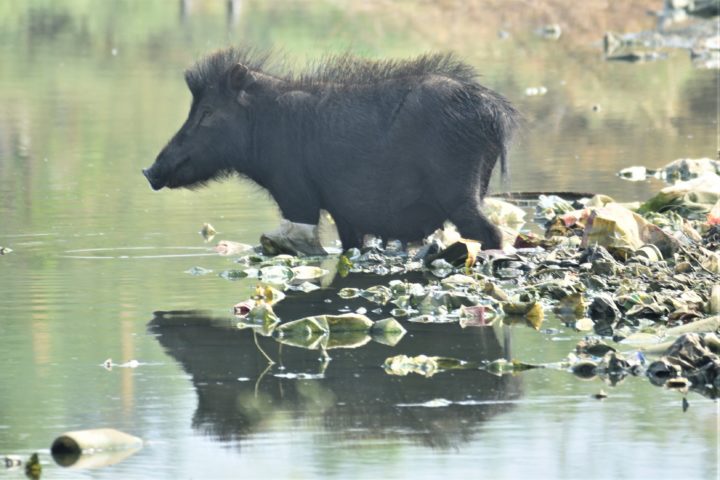
A ravenous hog,
you constantly feed.
Always demanding,
your time it bleeds.
Doing nothing,
still has a fee.
Filling your mind,
like a strangling weed.
Let me leave you,
with this little creed.
The item to tend,
is your sanity.
Story: Truth disguised as fiction.
Post-truth: Fiction disguised as truth.
S1 <=> S2
^ ^
v v
~S2 <=> ~S1
This Greimas square explores the opposites of concrete and abstract, using photography as a context. In the Greimas square, these are the S1 and S2 concepts. The ~S1 concept is “not concrete”. The ~S2 concept is “not abstract”. The Greimas square for deriving new concepts or relations comes from relabeling the ~S1 and ~S2 with a more descriptive and less logical label. So here is an analysis to suggest some better words for ~S1 and ~S2.
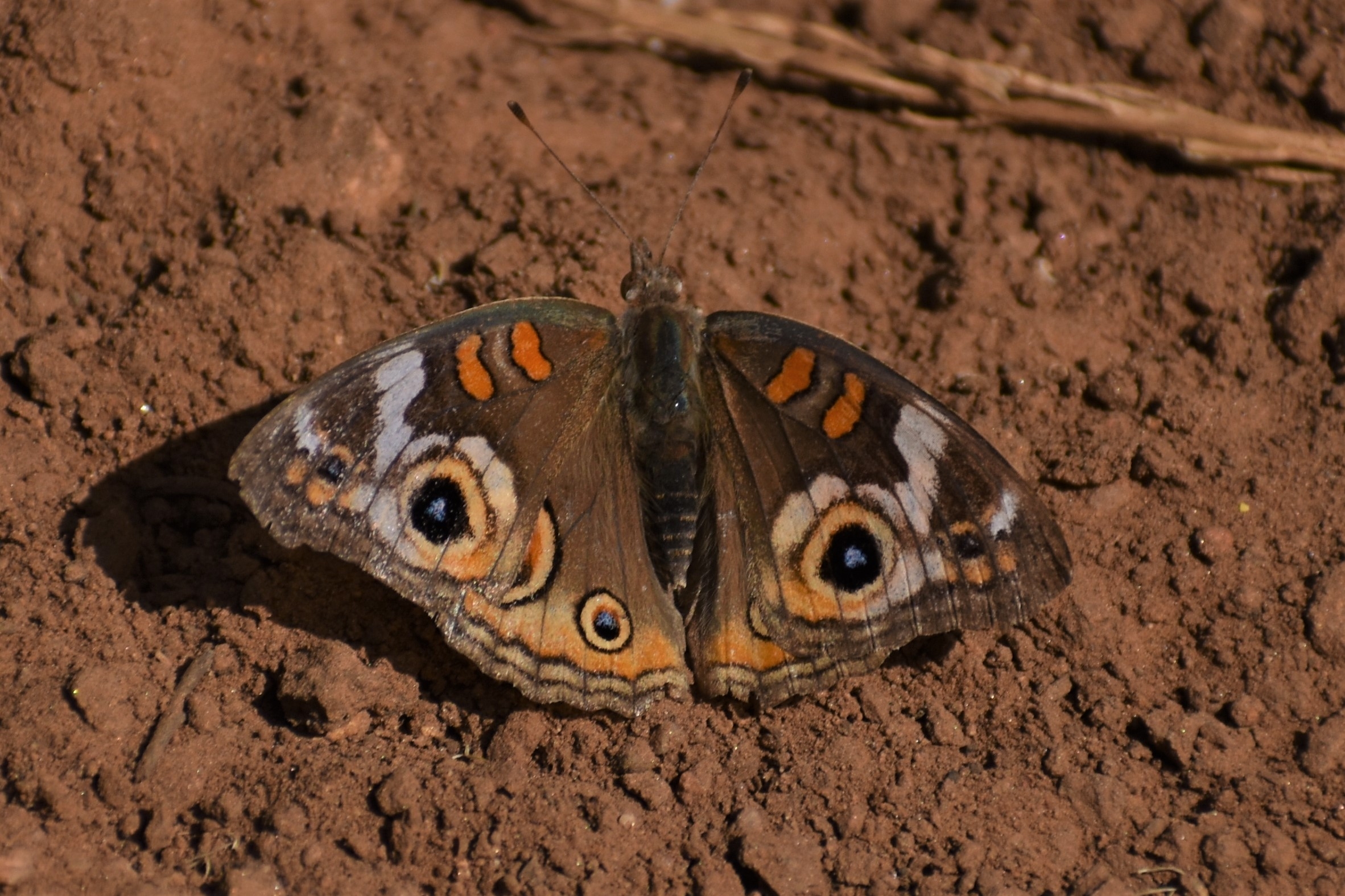
A concrete photo is of something you would see more or less as-is.
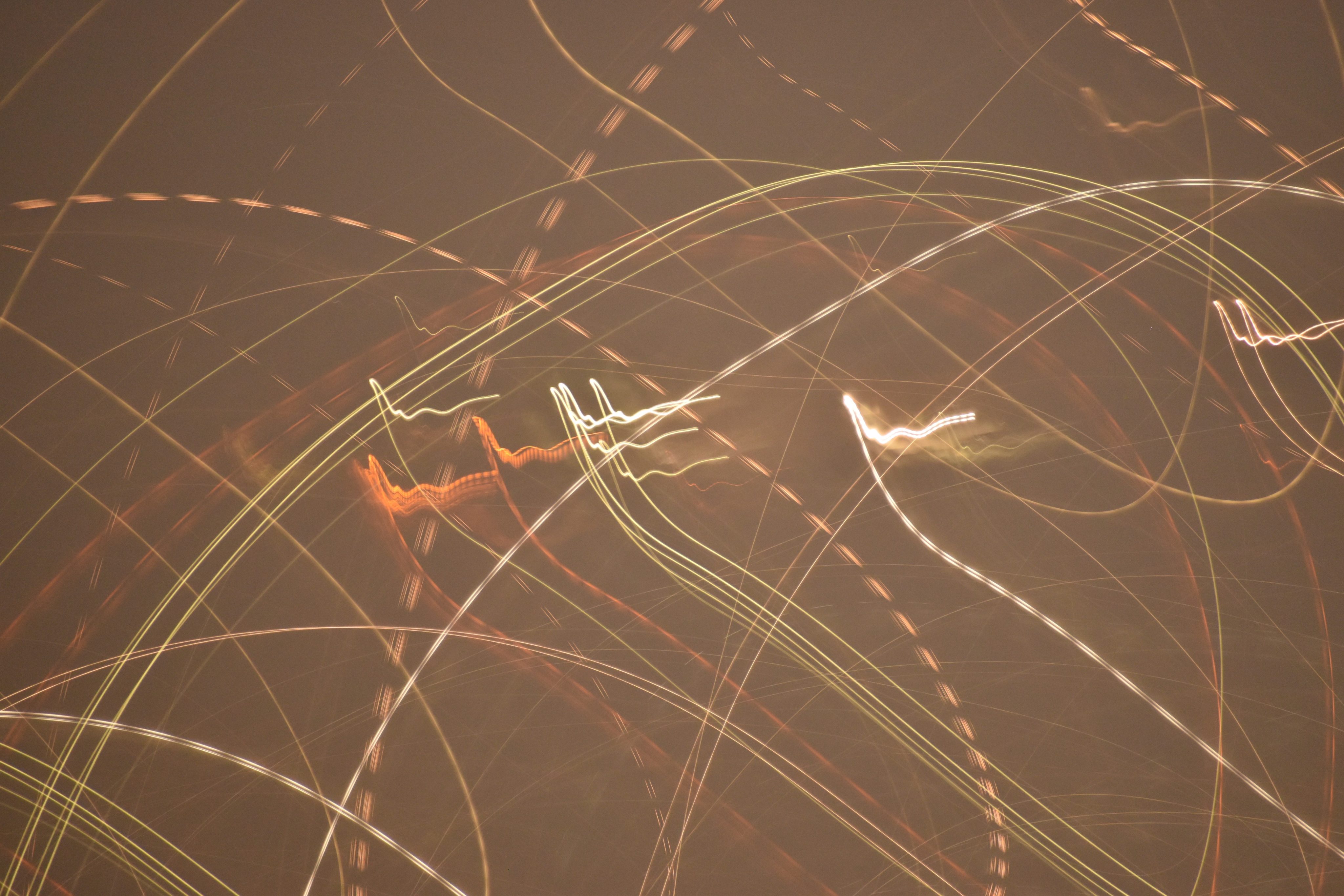
The abstract is the pattern or idea independent of any concrete elements within it.
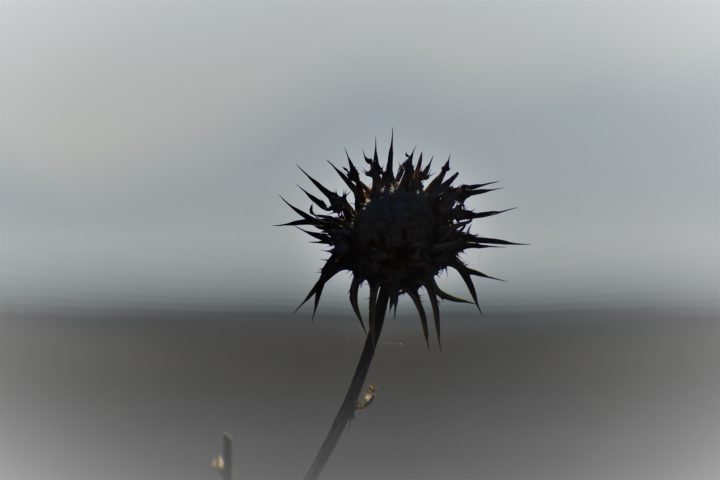
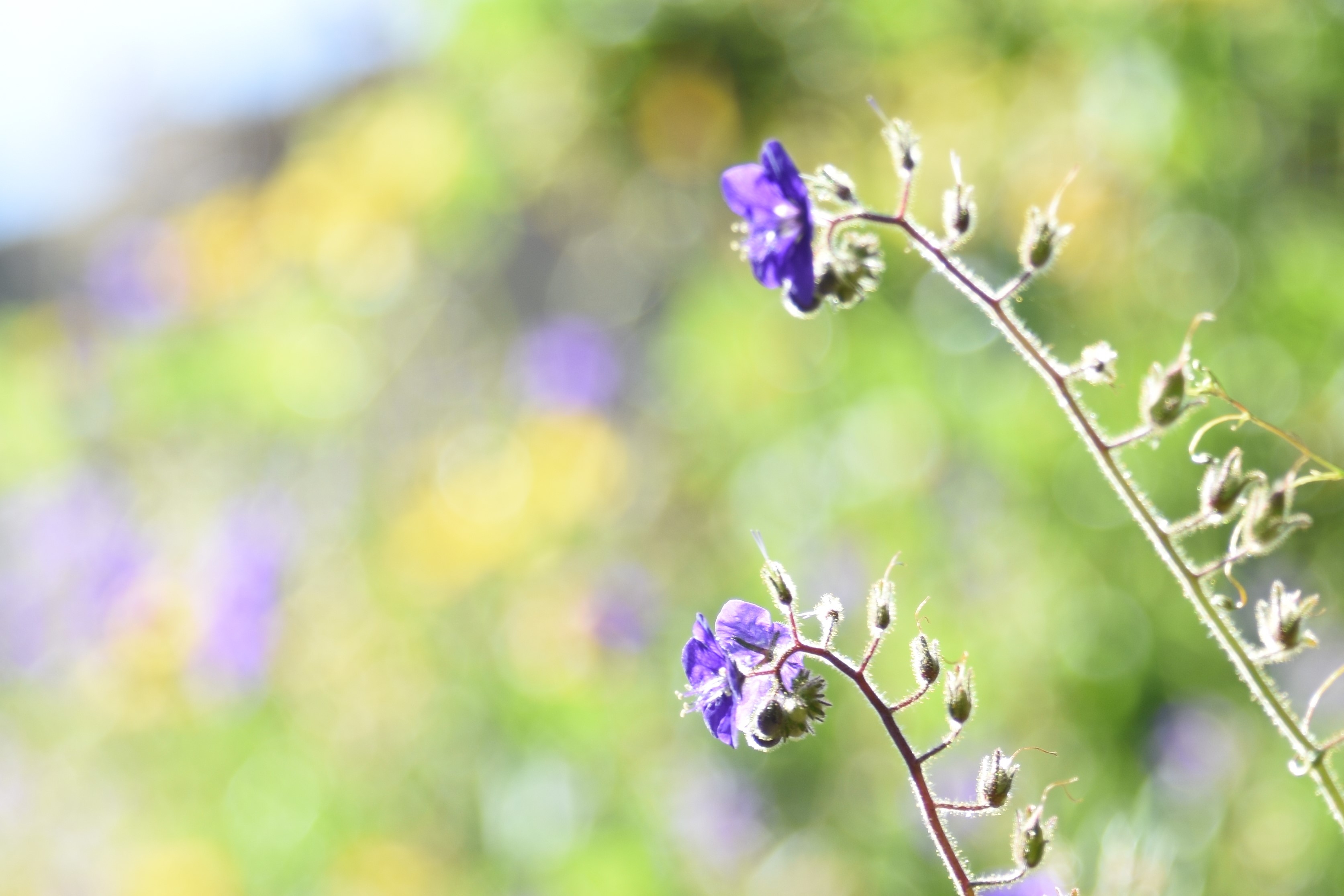
What is an example of something not abstract yet not quite concrete either? For a photo, a blur comes to mind. A blur photo focuses on one element of the photo and blurs out the rest. The rest is the suggestion of something concrete.
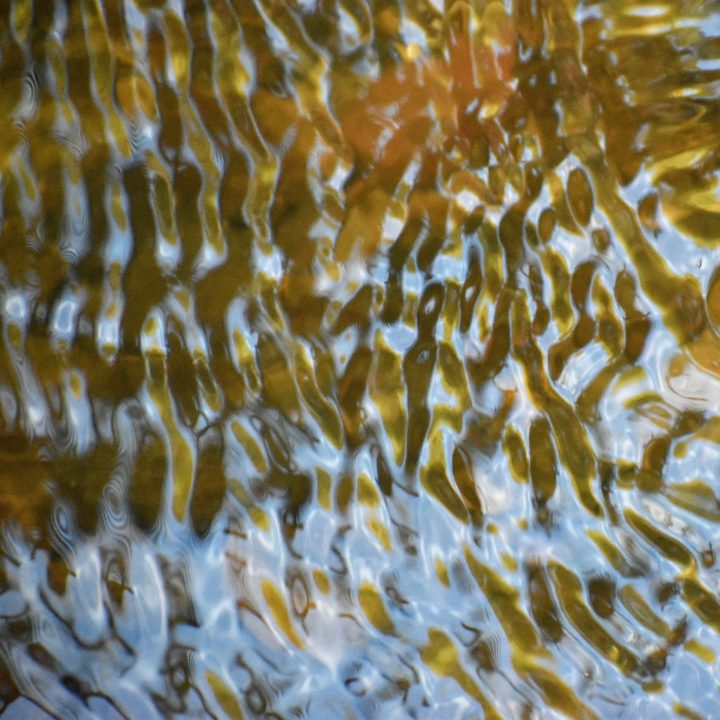
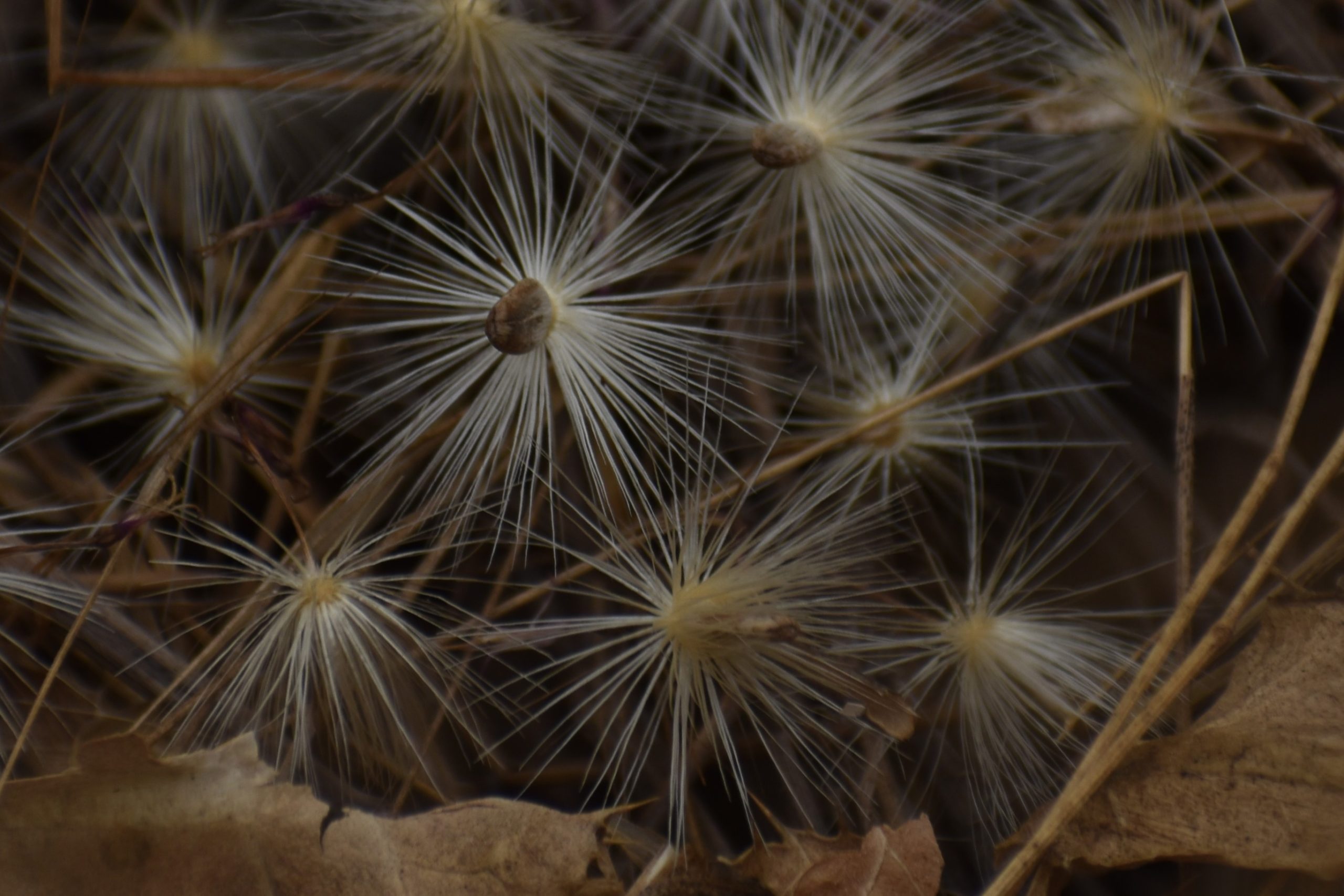
What is an example of something not concrete yet not quite abstract either? I think when the pattern of the elements is more important than the elements themselves. Concrete elements are still visible, but you are drawn to the pattern they create rather than the real elements that compose them. Emergence suggests a new pattern from concrete elements. When does the pattern become abstract? The pattern implies regularity but some of the best abstractions have irregular patterns if you can even call them that. Irregular patterns? Abstract nature? Sorry, this whole topic exudes oxymoron. A pure abstract photo would have no concrete elements in it.
Concrete <=> Abstract
^ ^
v v
Blur <=> Emergence
Concrete and abstract are the foundation concepts. Blur and emergence complete the square. Blur focuses your attention on something concrete while the background gives implied context. Emergence focuses your attention on the pattern but is created by concrete elements.
The concrete is a picture of you standing next to a lit Christmas tree. The blur is you with the Christmas tree blurred in the background, or possibly you blurred out and the tree in focus if the photographer doesn’t much care for you. The emergent is the Christmas tree blurred to bokeh with the lights as or more important than the contents, namely you. And the abstract is a bokeh Christmas tree with only the form of the tree suggested by the pixelated lights.
Of course, categorization is never definitive when it comes to concepts. Probably the most important concept is that you enjoy the picture.
Should I write about the ordinary ones? The lousy ones? Like a good picture of a bad thing? Is my job to filter out the dismal or only filter out the low quality? You’ve been warned.
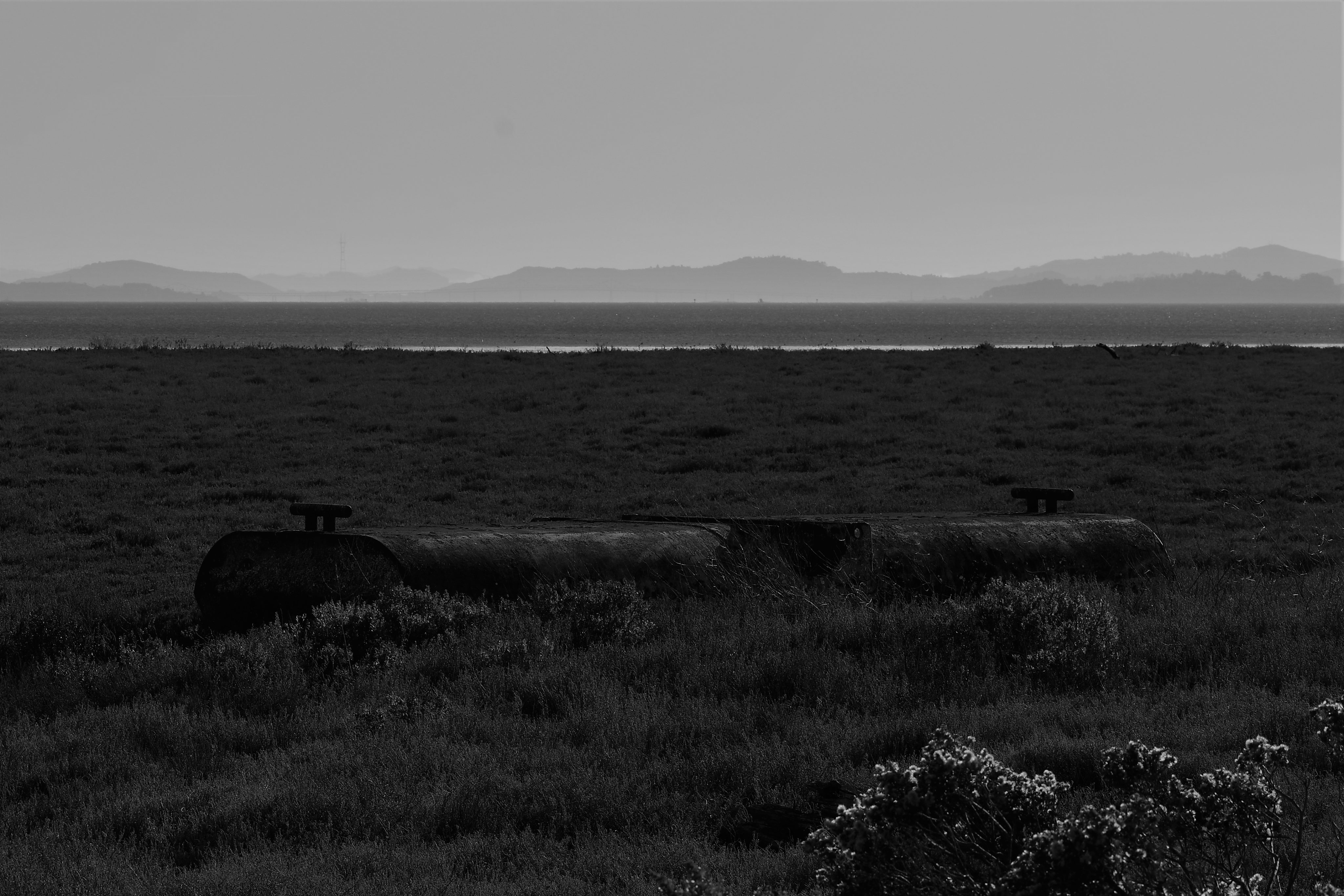
What I wanted was pics of exotic shorebirds and ducks at the National Wildlife Refuge. What I got was a weed-lined tractor trail with two and a half miles worth of an endless pickle weed patch on one side and nothing but overturned dirt on the other, set to a backdrop of an endless parade of truck traffic on the 37, in a bowl of distant mountains and urban skylines.
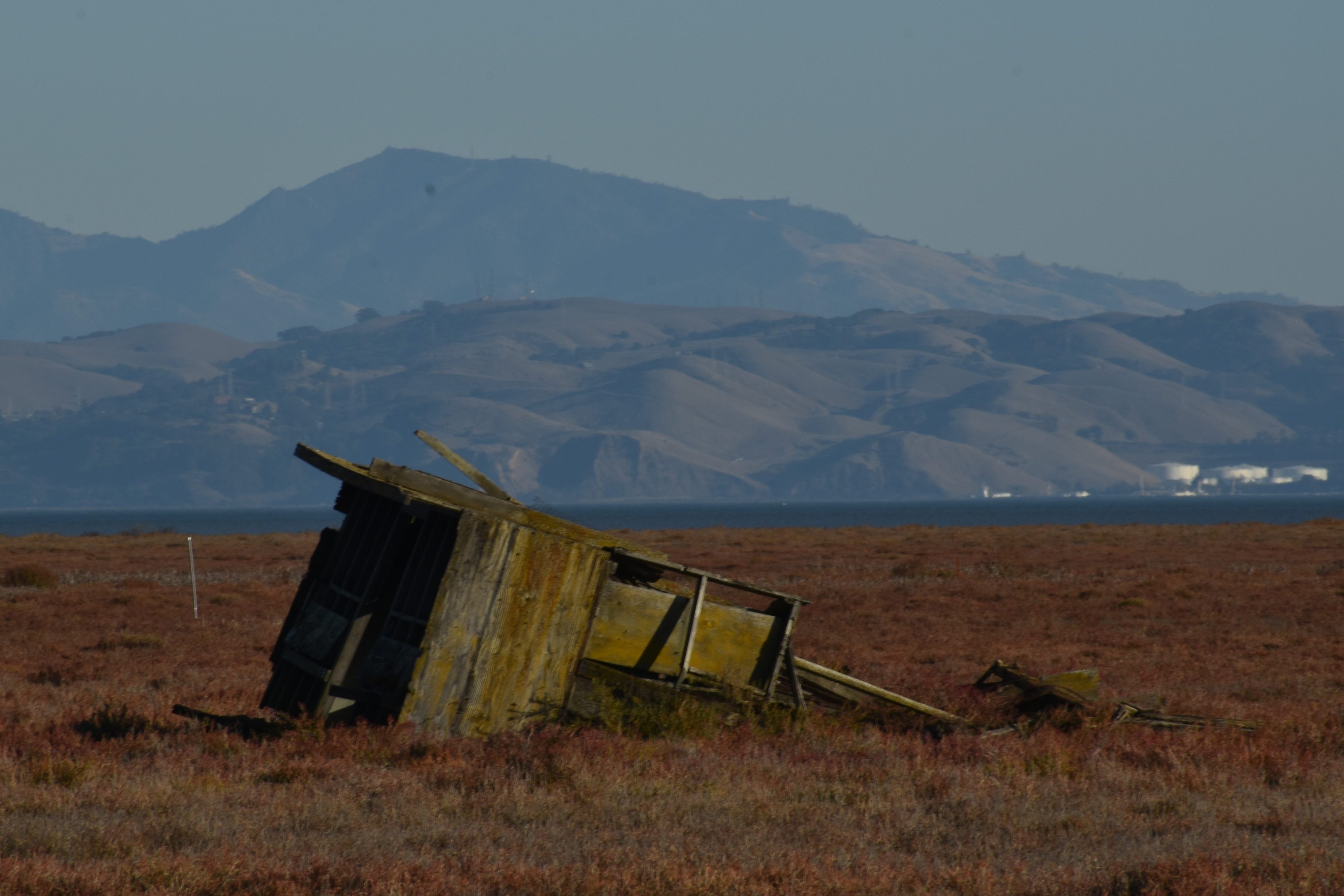
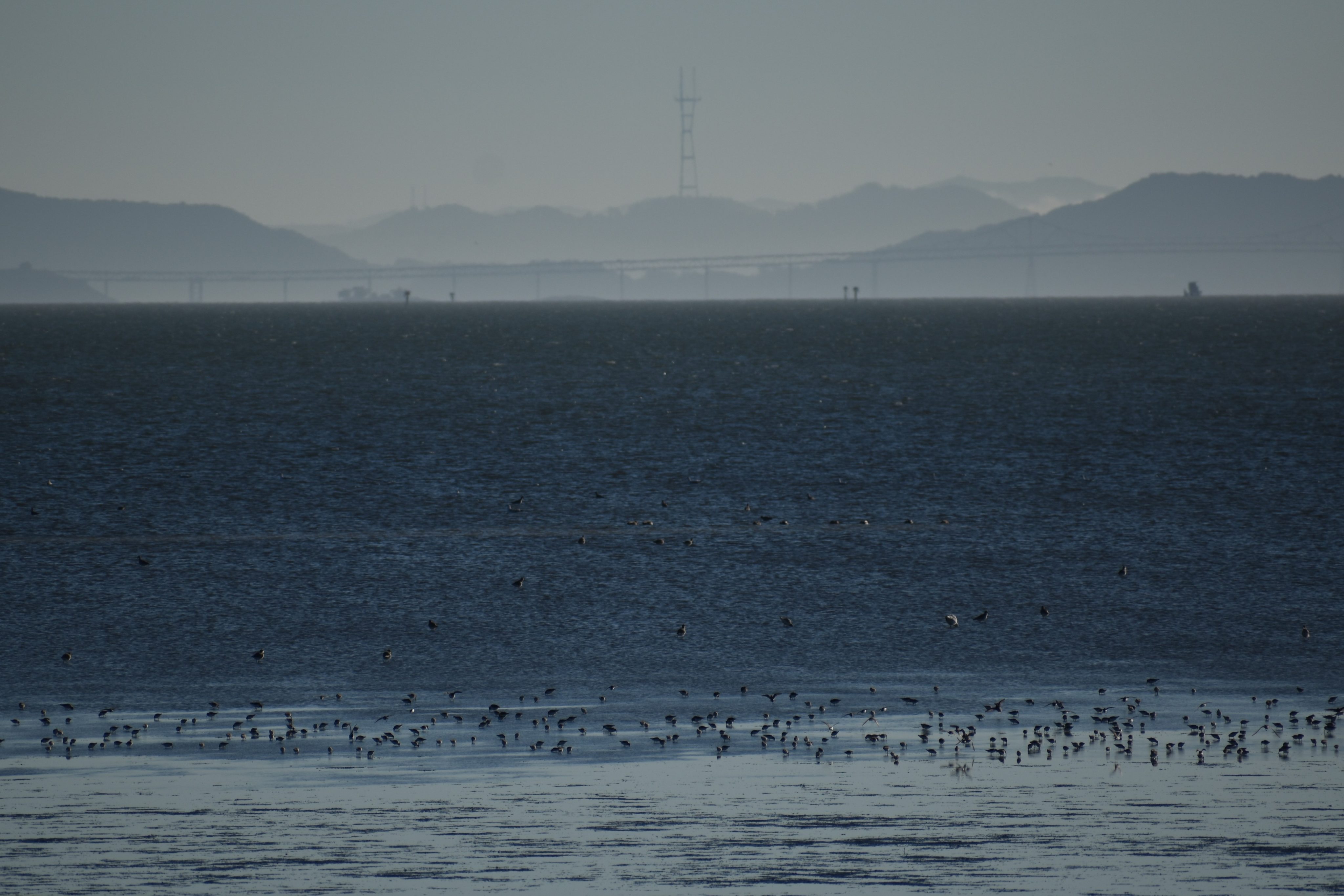
I followed the tractor trail two-and-half miles to the water of the North Bay. The bushes at the trailhead were littered with tp, looking mostly like a place to pull off the highway and to take an emergency crap. I was hoping that eventually, I would come upon tidal, bird-infested waters. Instead, I side-stepped spent shotgun shells with the remains of a metal carcass, passed by an abandoned structure of some kind, pondered a very lost and large cement block, and covered my nose with my face mask hoping to block out the odors of a foul-smelling ditch. When I arrived at the most northerly point of the North Bay at low tide, I witnessed nothing more than mudflats and vanishingly small birds in the tidal distance.
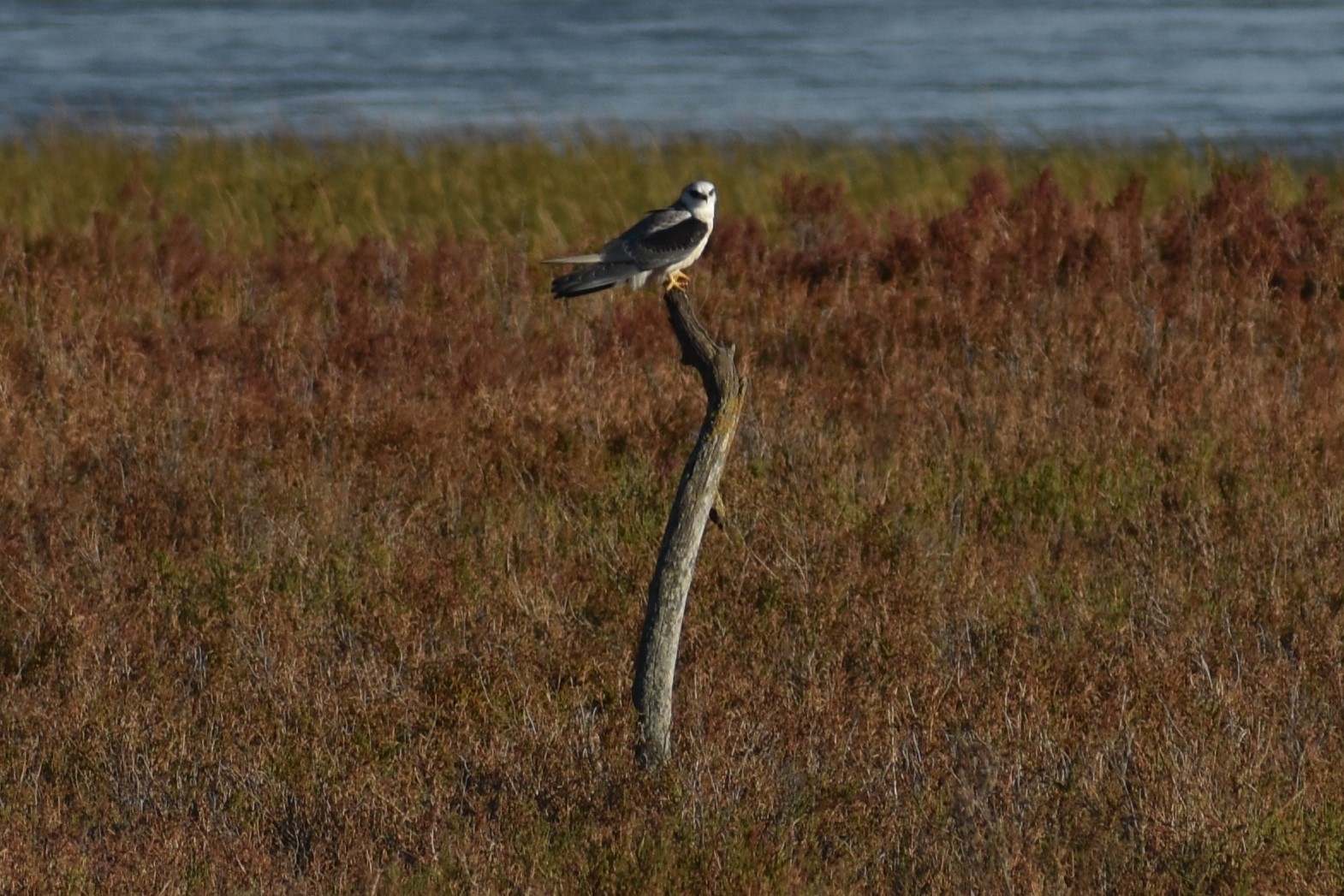
Trying to make lemonade out of lemons, the temperature was perfect and there was barely a cloud in the sky. Even weeds can be colorful with interesting shapes. The junk piles make for semi-interesting compositions embedded in the pickleweed and a horizon of hills. A kite stopped on a stump protruding ever-so-slightly above the terrain. Two deer ventured out onto the barren fields from a small weed patch. I wondered if deer have ankles to twist as they retreated back at the sight of me over the clumpy dirt to their weedy home, probably confused as to why a person was on the trail at all. As I walked, I drove flocks of songbirds in front of me from one weedy perch to another, apparently not sharing my dim view of the seed-sated weeds.
I often wonder when I hike alone what would happen if I keel over. On this one, I don’t think anyone would chance upon me until the next planting season when some hapless farmer would wonder what that crunching noise was under his big fat tractor tires. I would have expired within sight of the highway with the indifference of nothing more than roadkill. I’ve hiked in remote places with more people than this trail (none). I was close enough to see yet far enough never to be seen.
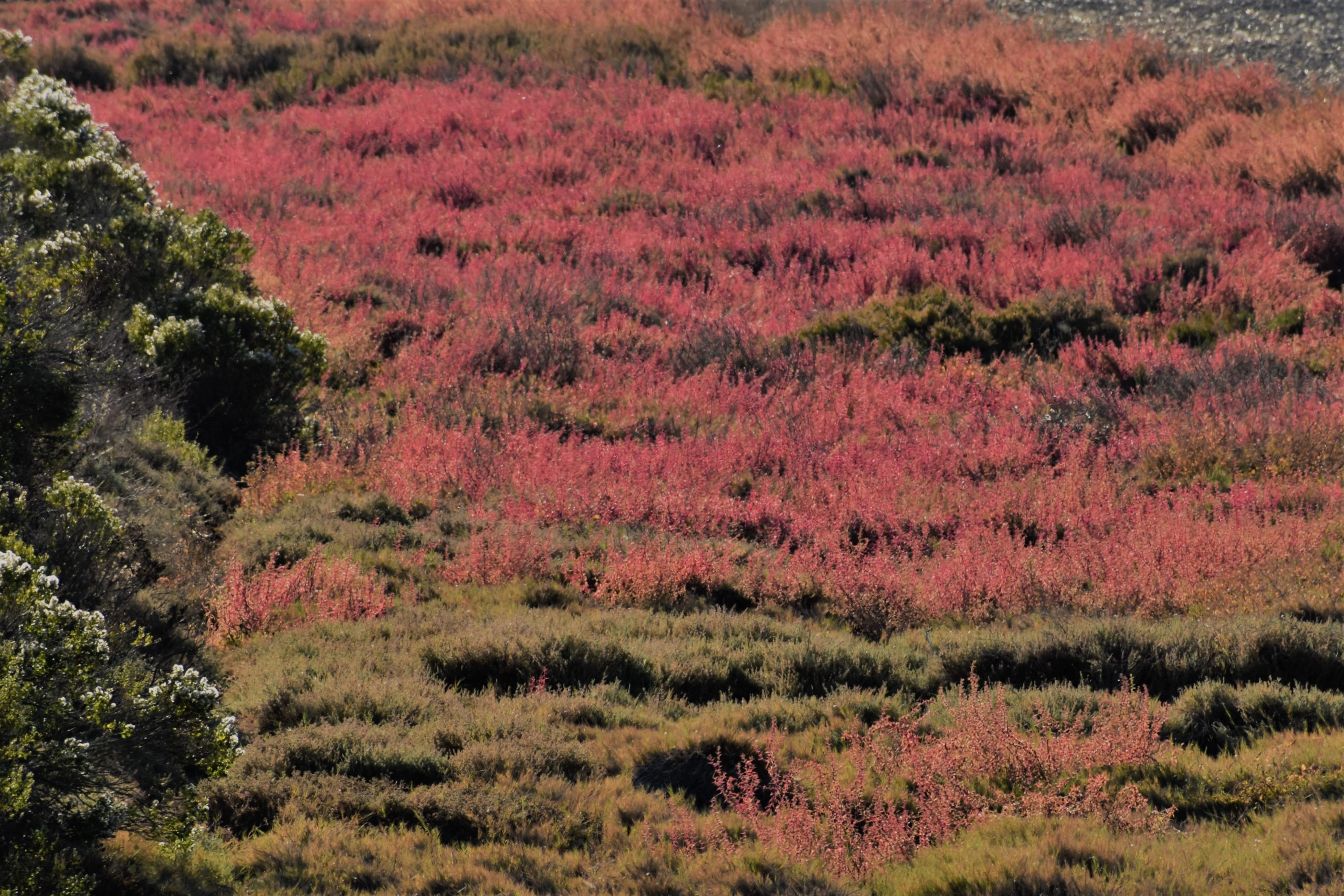
I felt dirty when I was done, like negotiating with a used-car salesman. It was an ugly hike. As you may suspect, I don’t recommend it. But keeping people away may be just what the birds need.
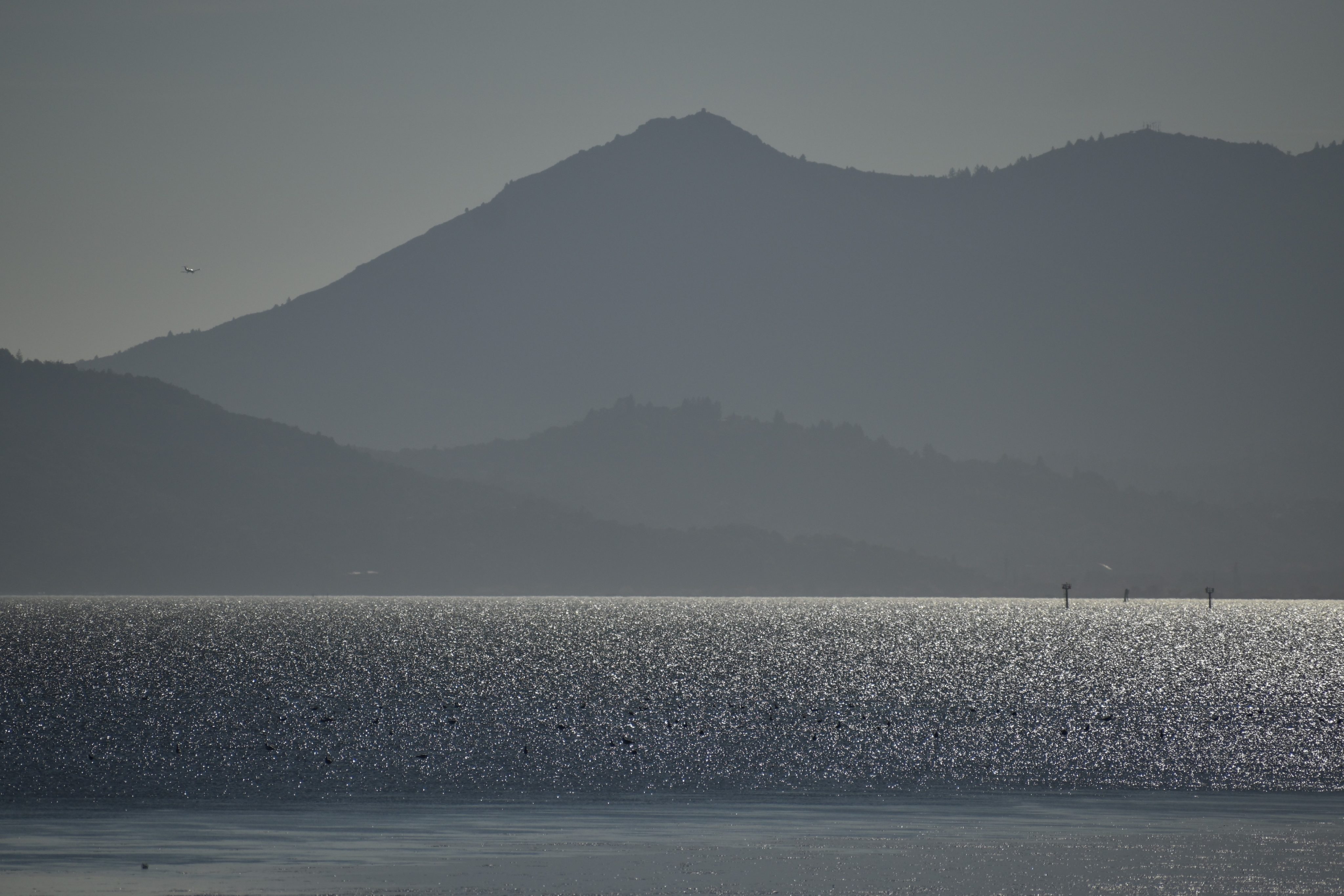
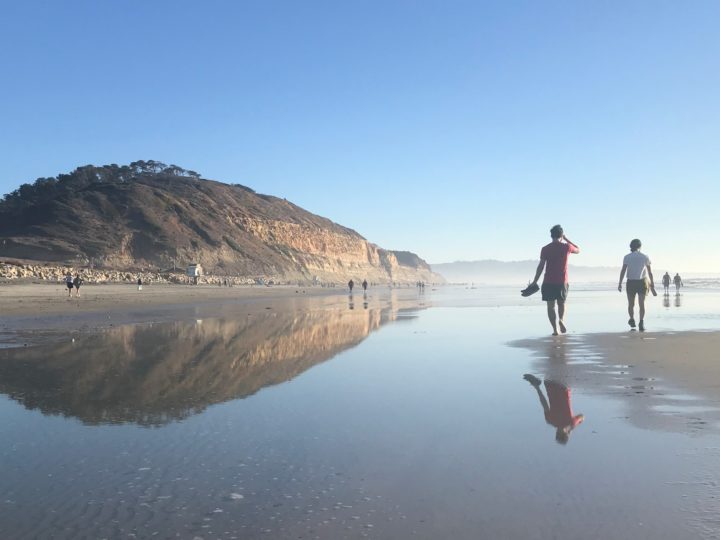
With every King Tide comes its opposite, an extremely low tide. Is it a pauper tide? An anti-king tide? Why does more water get to be king and not more beach? Because it throws a temper tantrum of wanton power on rocks protecting the road and boardwalk?
The extremely low tide is royalty, too. So, I hereby declare the extreme low tide as the Queen tide, an opposite of sorts in the ways that are of importance for my purposes. I hope to show her moods and airs and beauty worthy of a queen.
The format for this display is “a sort of American haiku.” (Jose gets credit for the appellation.) I take it to mean to put a little unstructured poetry to a picture, to see it as something more than what is in its bare, wooden frame. That is the theory anyway. Here is the practice.
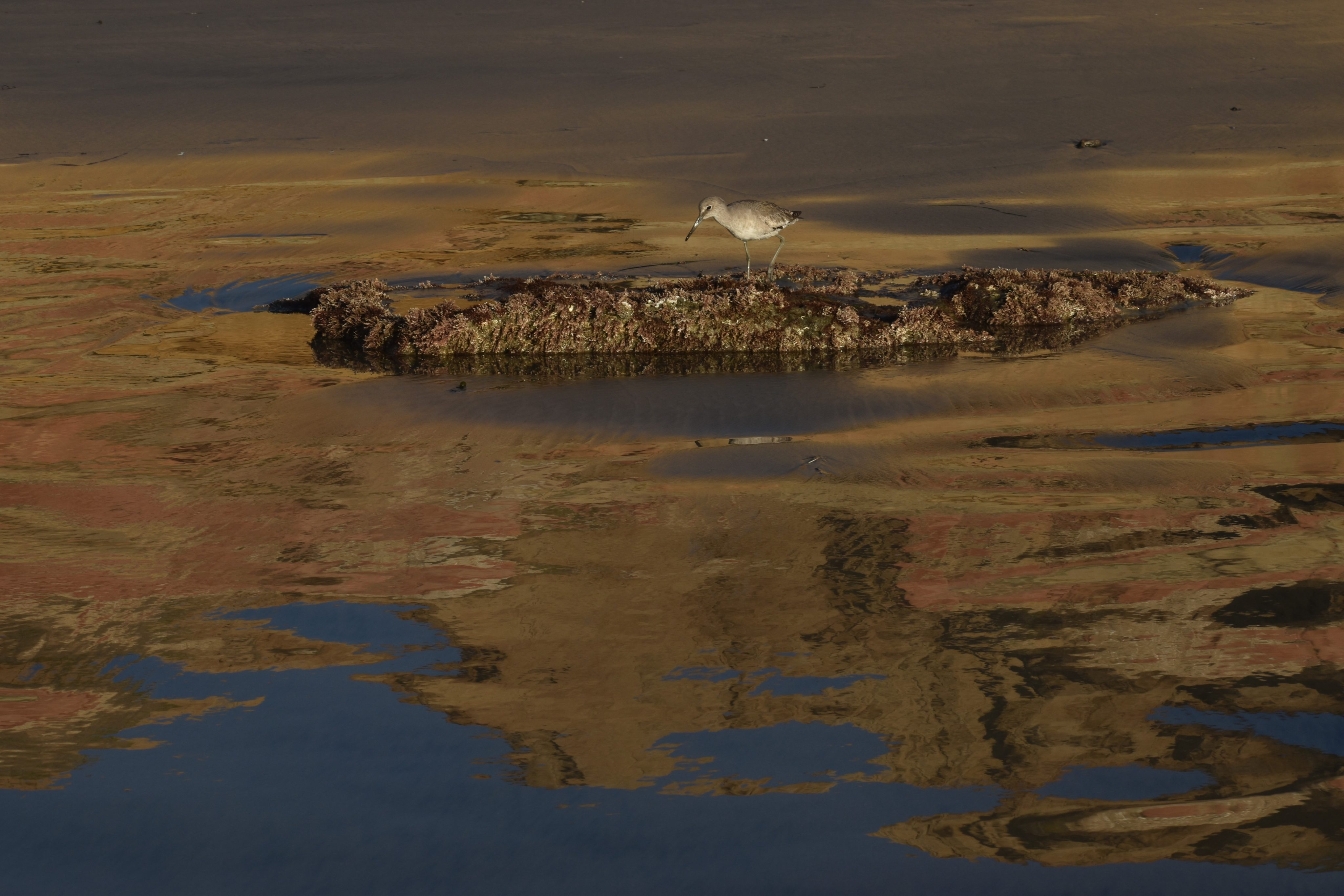
A willet standing on the safety of an island rock surrounded by the mirage of a submerged cliff dropping to the sky:
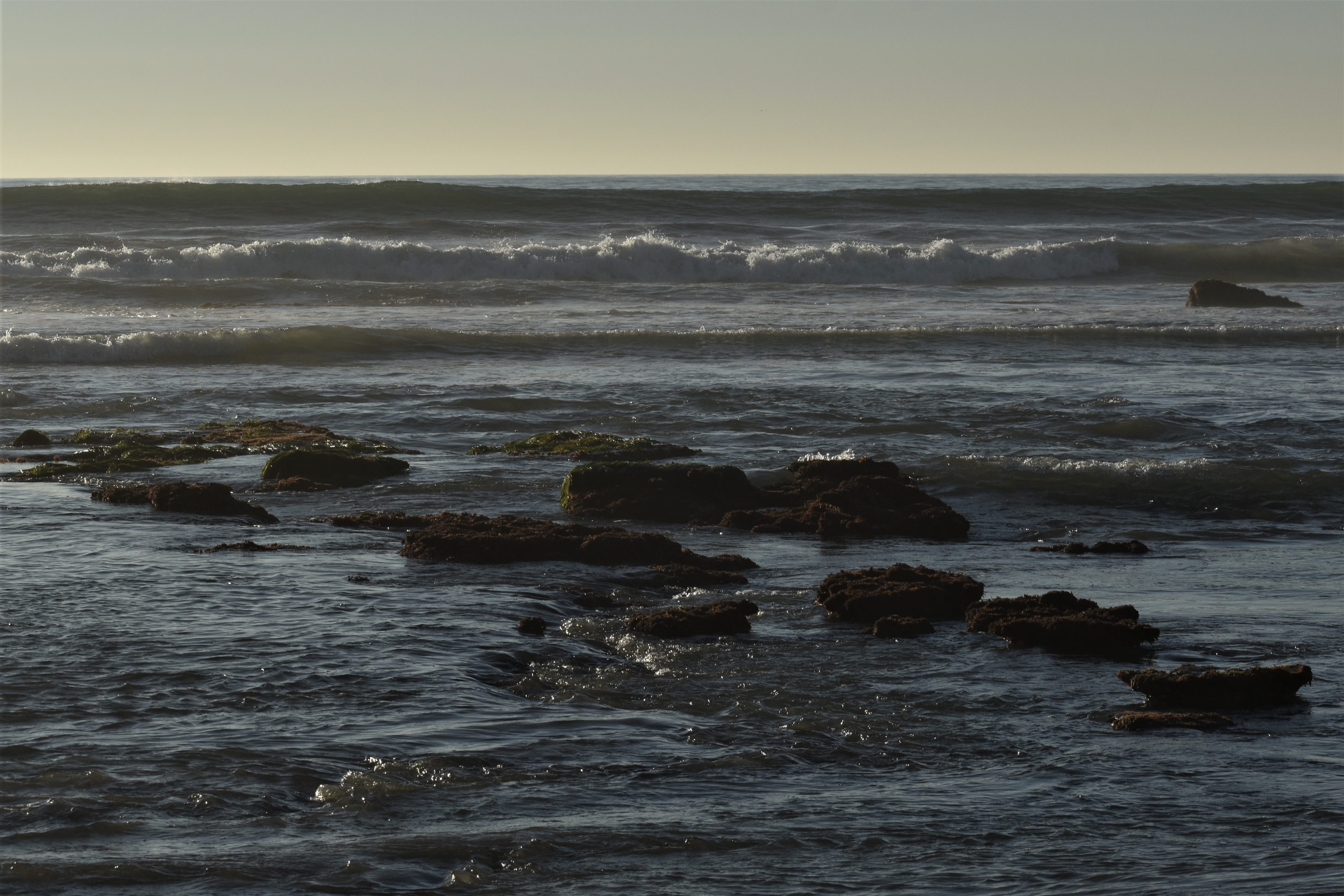
The surf backing off from the resting reef rocks:
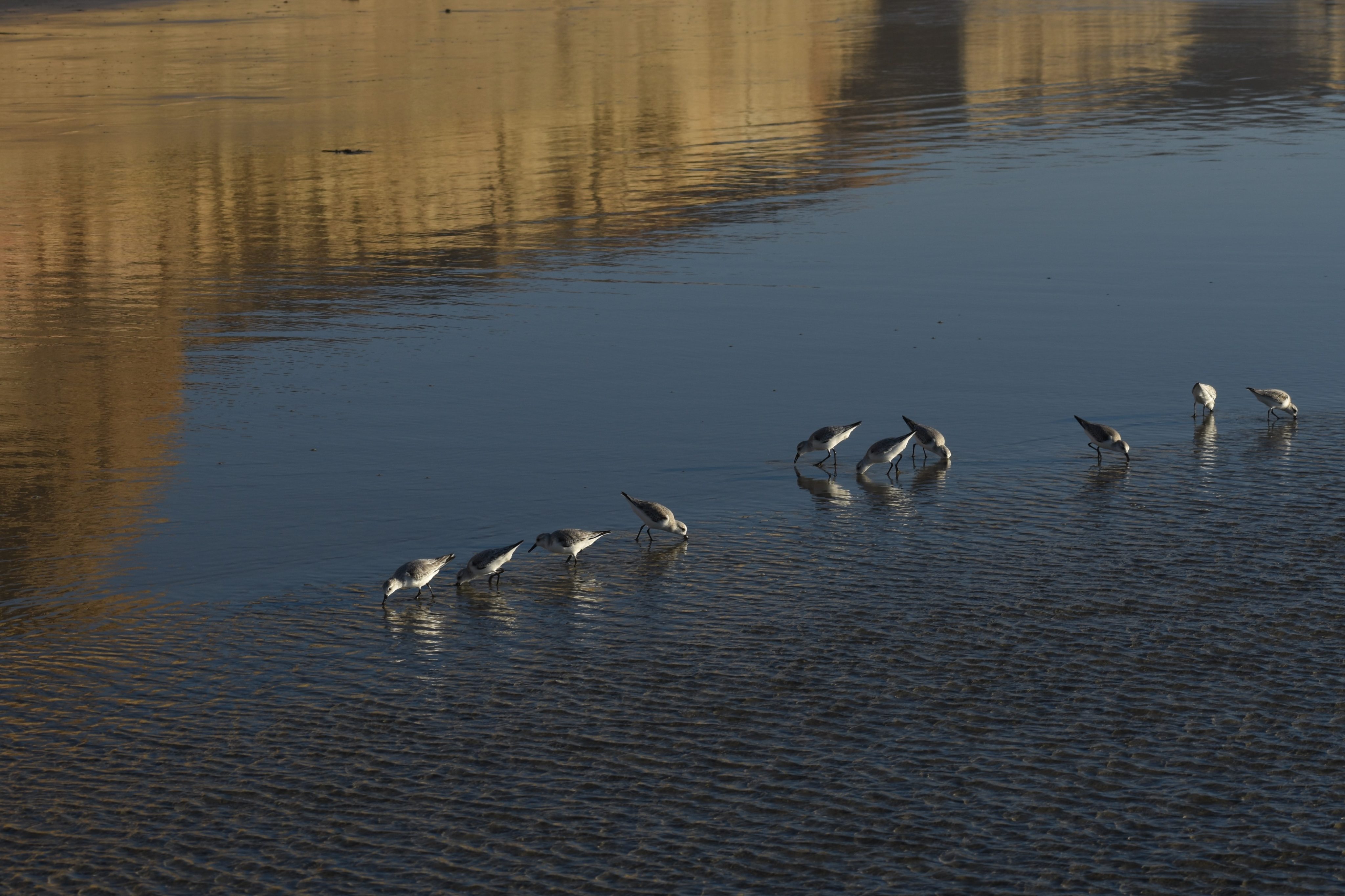
Plovers pulling out the wrinkles of the unkempt sheet of the sea:
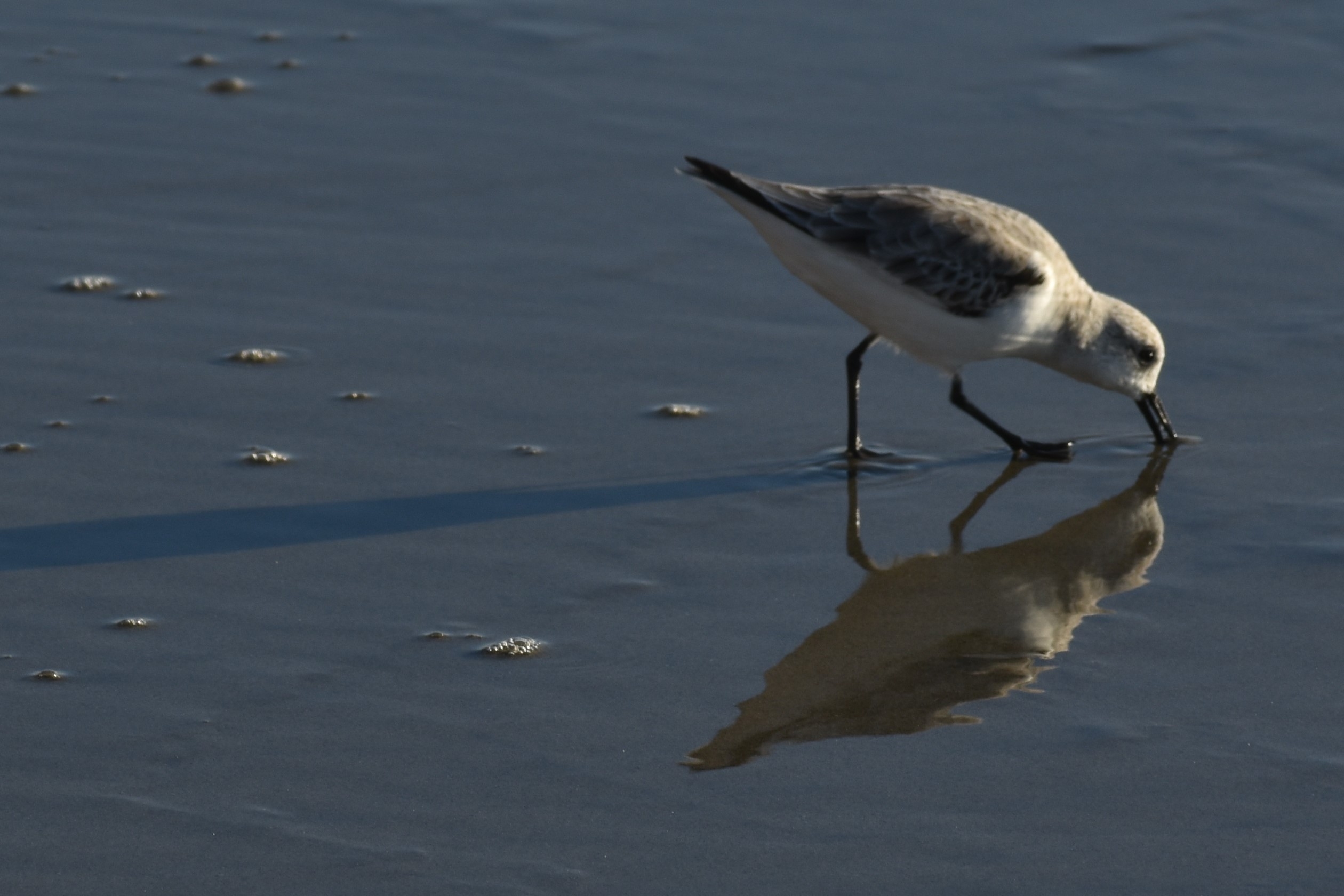
Plover snipping at its mirrored self:
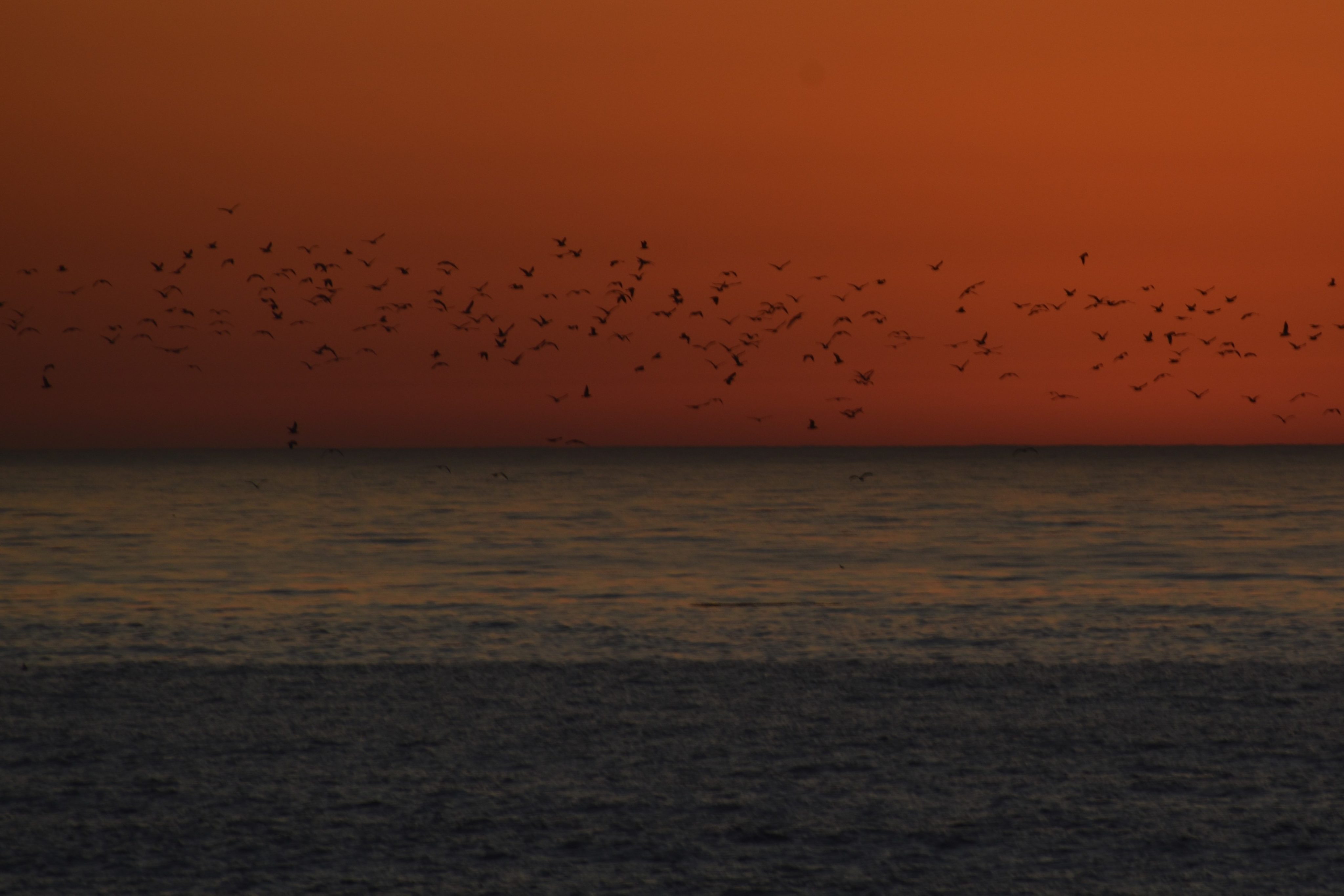
Flock disbanding after patiently watching the end of the day:
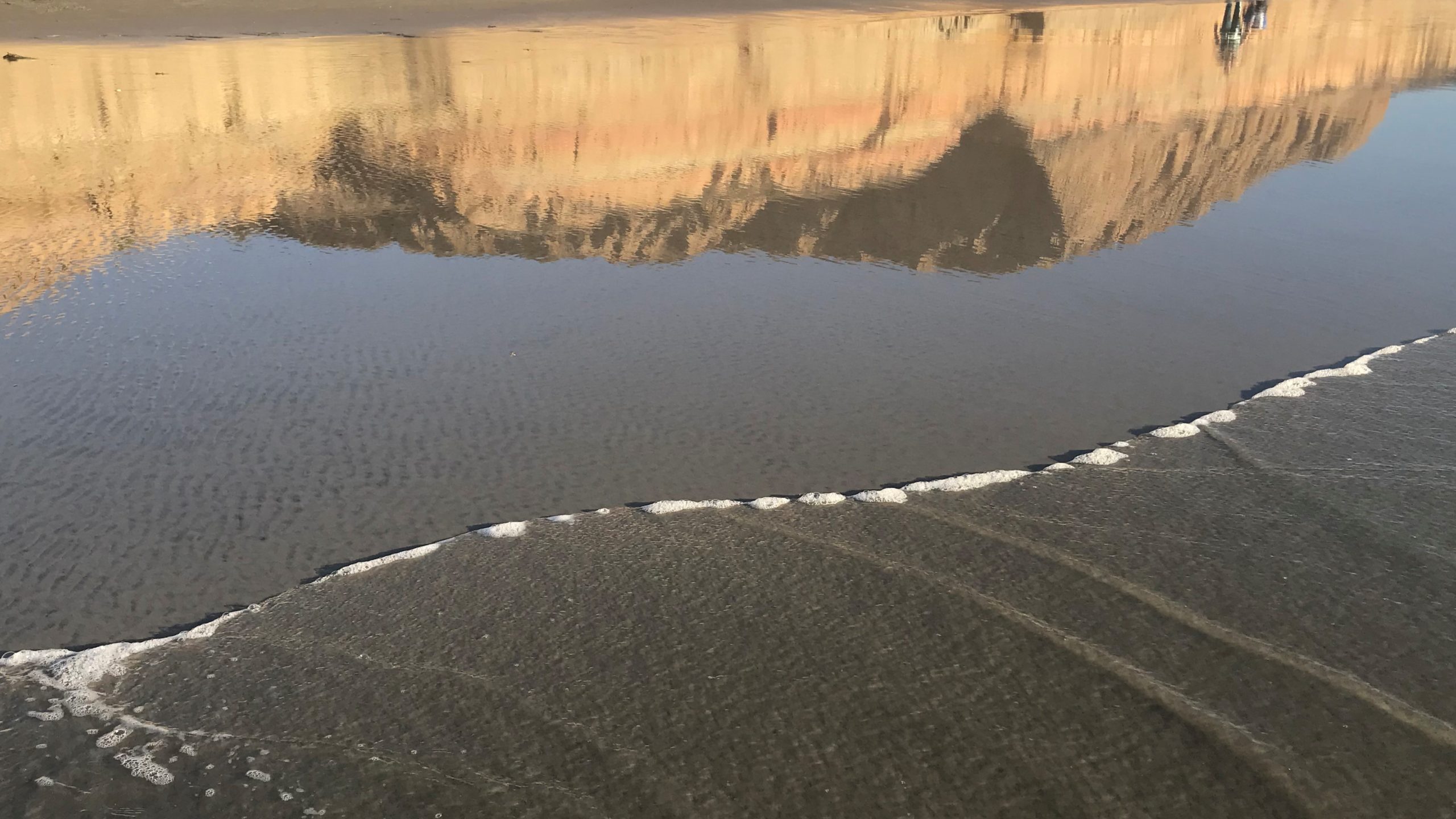
Cliffs painted on the ephemeral canvas of a silky shore:
The gaudy rouge of an ancient queen tide:
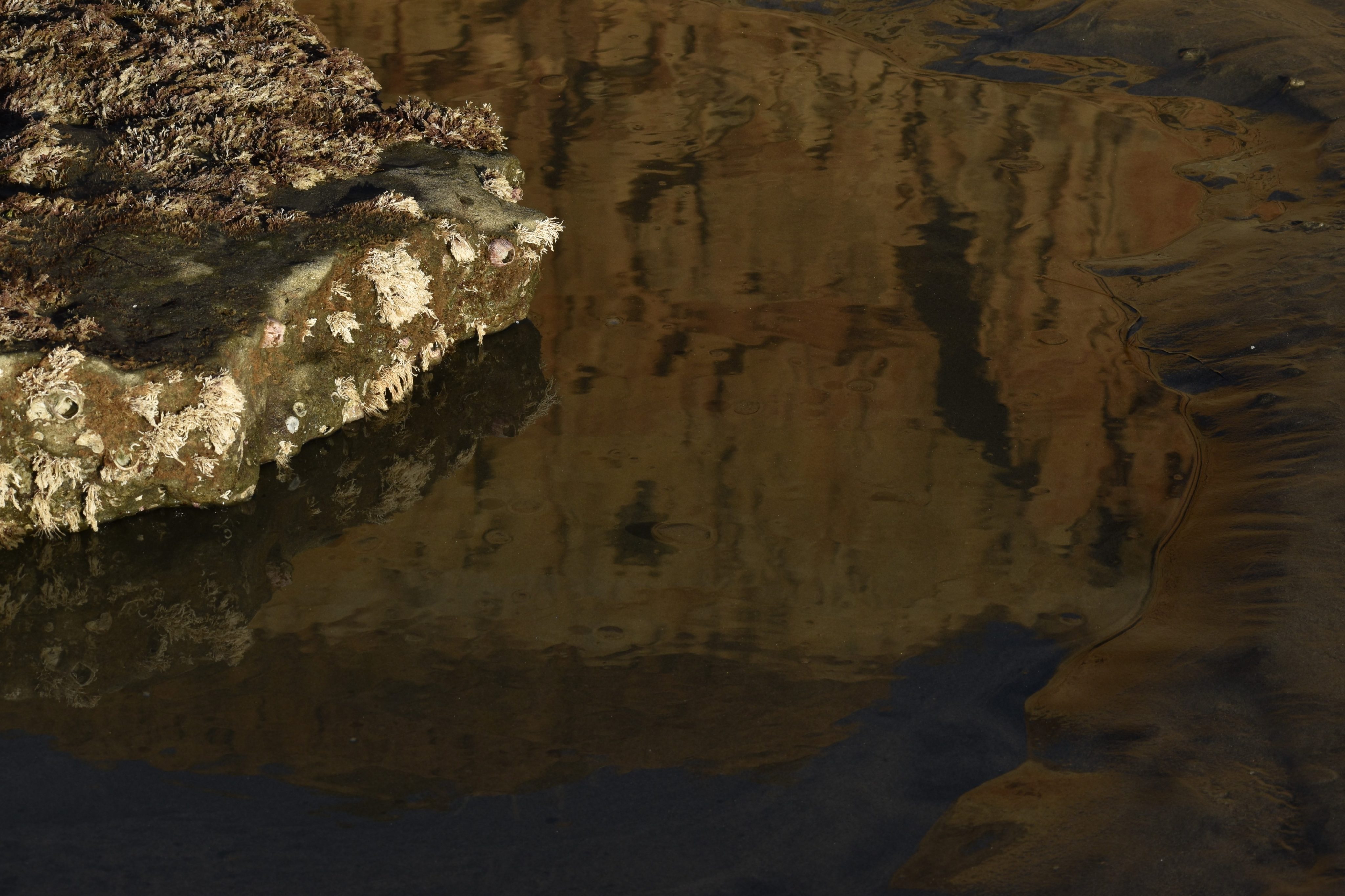
Pocked chocolate stairway to Olympus of the tides:
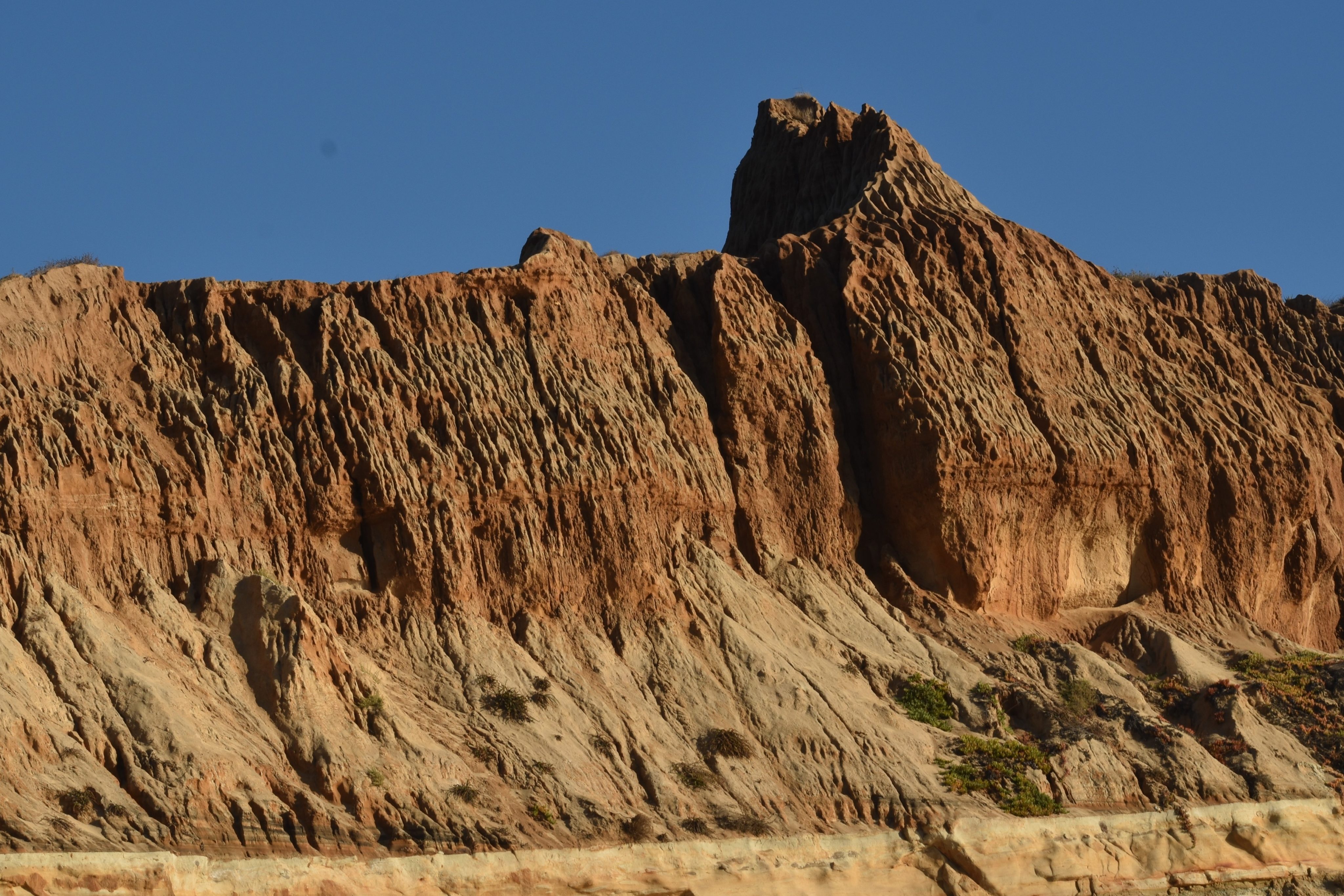
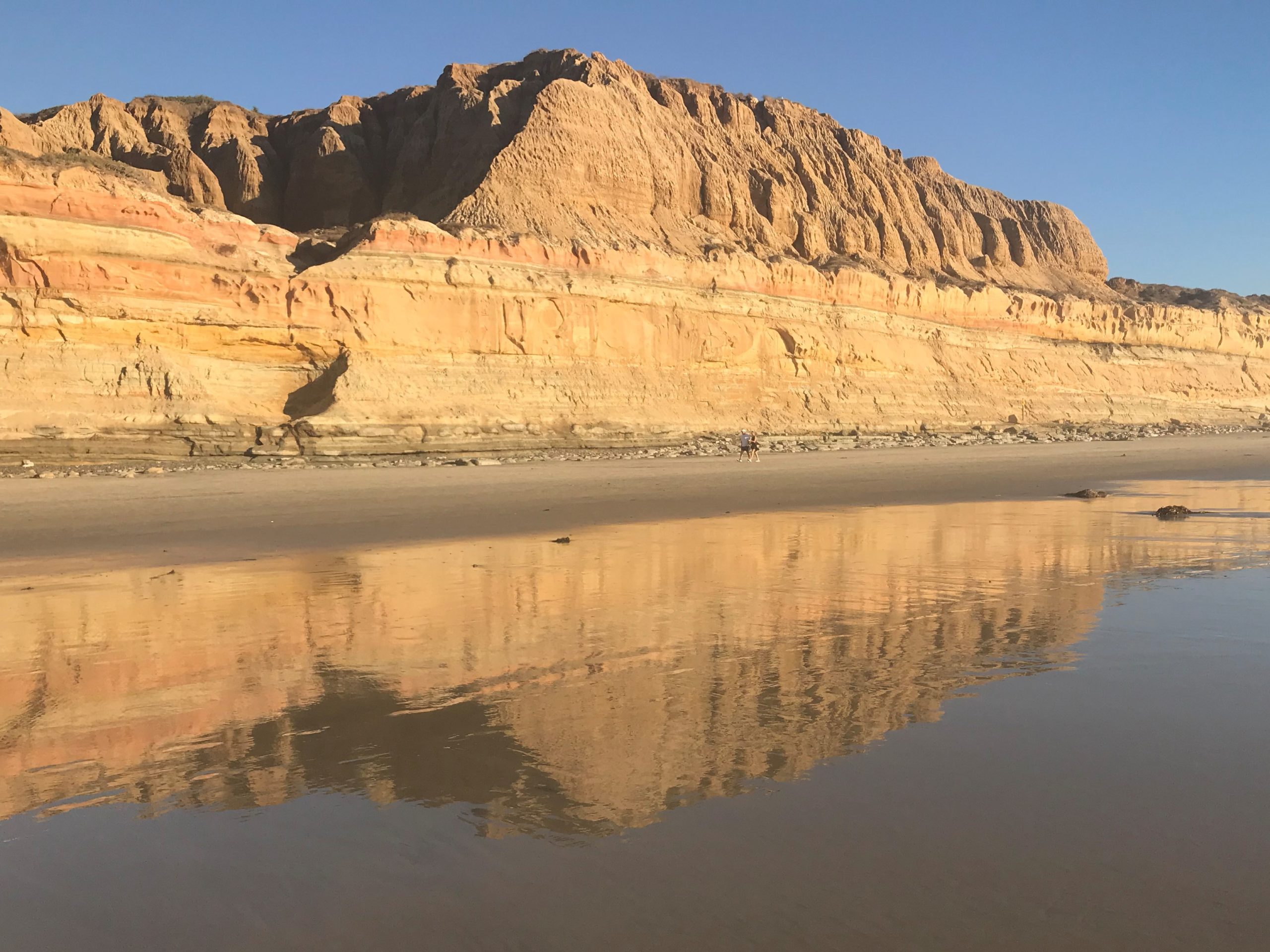
Well, that is it. What, you want an encore? Ok, one more just for you. King and queen both, the monarchy of the tides:
terratrashing: to transform a planet so that it is unable to support human life.
Terraforming is the process of making another planet habitable for humans. Elon Musk wants to terraform Mars. Science fiction writers like to write about terraforming other worlds, usually to escape all the terratrashing we’ve done to this one. Terratrashing is the word I propose, to describe the process of making a planet uninhabitable for humans, specifically, the one we live on.
Terratrashing leaves no ambiguity about the scale or the cause of what is happening. Trashing is not a natural phenomenon. Trashing a planet renders it uninhabitable for humans.
We need a phrase that describes more accurately what is happening to our planet and more importantly why it is happening to the planet. The phrases “global warming” and “climate change” have no teeth. Worse than that, they make it sound like the processes are natural phenomena. The climate changes all the time. A little global warming sounds kind of nice, especially to people in cold weather climates digging themselves out from three feet of snow. If the worst-case scenario of five degree C temperature rise comes to pass, this planet will be unrecognizable to those of us that live here now. If the carrying capacity of the planet drops to one billion from the projected ten billion peak, nine billion people will die, and everyone will suffer.
Worse, global warming climate change is only one symptom of planetary-wide, human-induced change mostly for the worse and not the better. Plastic pollution. Biomass reduction. Mass extinction. Now what phase will spark more action and accountability to stop that from happening, terratrashing, global warming, or climate change?